Internal apps
Staff, field, and operations apps. Access usually inherits a company directory. Data classifications and audit trails matter as much as screens.
Enterprise mobile app development for US organisations that need enterprise mobile apps to integrate with systems already in place, clear security review, and a named owner after launch. Mobile app development for enterprise briefs from our Noida headquarters with a US office in Newark, Delaware.
Enterprise mobile application development is not a consumer MVP with a darker colour scheme. Mobile enterprise application development requirements diverge because the app sits inside an organisation: identity, systems of record, distribution, and who supports users after launch. Catalogue hub: mobile app development services.
Staff, field, and operations apps. Access usually inherits a company directory. Data classifications and audit trails matter as much as screens.
Apps your customers use that still sit on your CRM, billing, or case systems. Public-store polish plus backend contracts your security team will review.
Consumer apps often start from a blank stack. Enterprise apps inherit identity, vendors, and release gates. That inheritance usually sets the timeline more than UI volume does.
Name the product owner, support path, and repository ownership before build. Source code and IP transfer to the client on delivery; day-to-day support ownership stays inside your organisation.
Public stores, internal distribution, or both. MDM and signing change when the app never appears on a public store page.
Vendor questionnaires, architecture reviews, and onboarding cycles belong in scoping, not as a surprise after the proposal.
Enterprise app development service covering discovery, integration assessment, enterprise custom app design, engineering, distribution, and support for US organisations. Related path for custom enterprise solutions: custom app development.
Field, warehouse, and staff tools with role-based access, audit-friendly logging, and repositories under your organisation.
Store-ready clients that still honour your backend contracts, consent rules, and support model.
APIs and adapters against the systems you already run. Integration ownership and access paths are named in discovery before quote.
Apps that join an existing directory rather than inventing a new login island, with admin ownership named on your side.
Swift and Kotlin when depth matters; Flutter or React Native when one shared backlog is the honest fit across stores.
Public or internal distribution, then four months of free post-launch support that is standard in every contract.
Items an enterprise buyer needs settled internally before a vendor can scope honestly. Free discovery and business consulting can help surface gaps; the ownership of each item stays inside your organisation. No figures, timelines, or SLA language on this ledger.
Which systems of record the app reads or writes, and who owns their APIs. Unowned APIs block scoping because access and change windows sit outside the vendor.
Usually owned by IT / architecture, with product naming the workflows
Whether an identity provider already exists and who administers it. New login islands create security and support debt; inheriting a directory needs admin cooperation.
Usually owned by Identity / IAM or IT security
Public store, internal distribution, or both. The choice changes signing, MDM hooks, and how users receive updates.
Usually owned by Product with IT / MDM operations
Which data the app will touch and how it is classified. Classification drives hosting region, logging, retention, and who may see production data.
Usually owned by Security / privacy / data governance
Who signs off on security review and what their process requires. Questionnaires and architecture reviews belong in the buy, not after the proposal.
Usually owned by Information security / risk
Whether procurement requires a vendor onboarding cycle, and what that cycle needs from the vendor. Length and paperwork vary by organisation; name that the cycle exists before you expect a signed agreement.
Usually owned by Procurement / vendor management
Who owns the app budget versus who owns the requirements. Split owners without a named product lead stall scope decisions.
Usually owned by Business sponsor + product lead
What existing solution is being replaced, if any. Replacement work needs data migration, cutover, and support for users who still live in the old tool.
Usually owned by Product / operations
Who supports users after launch: help desk, product ops, or a named business unit. Vendor post-launch support is time-bounded; organisational support is not.
Usually owned by Support / product operations
Written as a readiness checklist for enterprise buyers. It does not invent SLA tiers, response clocks, or procurement durations.
Considerations a US enterprise client faces when an app must live beside existing systems. Systems such as SAP, Salesforce, Workday, ServiceNow, or Microsoft Dynamics may appear in a brief as integration targets. That is a client requirement to assess, not a claim that Mobulous has delivered those platforms.
API ownership, change windows, and test data access usually dominate schedule risk. Surface them before UI volume debates.
SSO and identity inheritance mean the app joins your existing users, roles, and offboarding. Name who administers the provider.
Some apps never leave MDM. Others need both public discovery and internal controls. Decide distribution in discovery so signing and release paths match.
Questionnaires, architecture reviews, and vendor onboarding run in parallel with scoping when your process requires them.
Built for US organisations that need mobile enterprise app development with integration and security review in the buy, not after it. National US delivery context: mobile app development company in the USA. No week counts, day counts, prices, or SLA tiers on this page.
Free functional and technical discovery calls. A mutual NDA comes first, before detailed discussion of the product, data, or systems.
Map systems of record, API owners, identity provider, distribution model, and data classifications against the readiness ledger.
Discovery produces a scope document. The proposal and agreement follow that scope. Cost and timeline are derived from it, not from a generic range.
Security review and vendor onboarding run in parallel with scoping when your organisation requires them, so the written agreement is not blocked by paperwork that starts too late.
UI, engineering, and QA against the agreed scope for iOS, Android, or cross-platform delivery, with integration work named in the backlog.
Public App Store and Google Play through accounts you own, internal distribution, or both, matching the decision taken in discovery.
Four months of free post-launch support is standard in every contract. Source code and IP transfer to the client on delivery.
Vertical fit is about integrations, identity, and data classifications in the brief, not a claim of every regulated licence. Healthcare and finance briefs may need HIPAA or PCI-DSS style requirements treated as build-to-requirements with counsel; those are not certifications Mobulous holds.
Care workflows and internal tools where health-data rules may apply; counsel names whether they do.
Staff and customer surfaces that may touch financial data classifications and payment partners.
Workforce apps with device management and offline-tolerant flows for operators.
Store and back-office apps that sit on inventory and order systems you already run.
Staff and student-facing tools with directory inheritance and clear support ownership.
Client and delivery portals with role-based access and audit-friendly logging.
Enterprise mobile development and app development enterprise work in the USA with named certifications and a real Newark office: 700+ apps delivered, 500+ clients, 12+ years (founded 2013), 100+ experts, and 4.7/5 on Clutch across 103 reviews. Also 4.8/5 GoodFirms (65+ reviews), 5.0/5 G2 (5 reviews), and 4.3/5 Google Reviews. Certifications: ISO 9001:2015, ISO/IEC 27001:2022, CMMI Level 3.
ISO/IEC 27001:2022 and CMMI Level 3 are held and stated plainly. We do not invent SOC 2, or claim HIPAA or PCI-DSS as certifications held.
Newark, Delaware is the only US location. Noida is HQ. Calgary, Alberta is a further verified office outside the US. No implied premises in other US cities.
Source code and IP transfer to the client on delivery under the written agreement. Store, cloud, and repository accounts stay yours.
Mutual NDA before detailed discussion. Functional and technical discovery calls are free and produce the scope document that drives the proposal.
Mobile enterprise app development and custom enterprise solutions that sit inside an organisation’s workflows, not consumer storefront demos. Lead card: iBuild, a Canadian construction client.
Client: iBuild (Canada). Cloud-based residential construction management for builders and project managers: real-time job tracking and reporting, project scheduling, document templates, job budgets and cash flow, mobile access, regulatory compliance, and coverage across sales, design, estimating, purchasing, construction, and warranty. Framed here as enterprise mobile applications development for an organisational operations product.
"We're impressed with how they consistently improve to meet our needs."
Verified on Clutch →"Mobulous delivered what exactly we wanted, they used to give regular updates regarding the project and made sure that I understand the technicalities of the project."
Verified on GoodFirms →"Professional team: easy to work with, timely delivery, and excellent communication."
Verified on GoodFirms →Mobulous rates 4.7/5 on Clutch (103 reviews), 4.8/5 on GoodFirms (65+ reviews), 5.0/5 on G2 (5 reviews), and 4.3/5 on Google Reviews. Clutch → · GoodFirms →
Reading for enterprise product teams
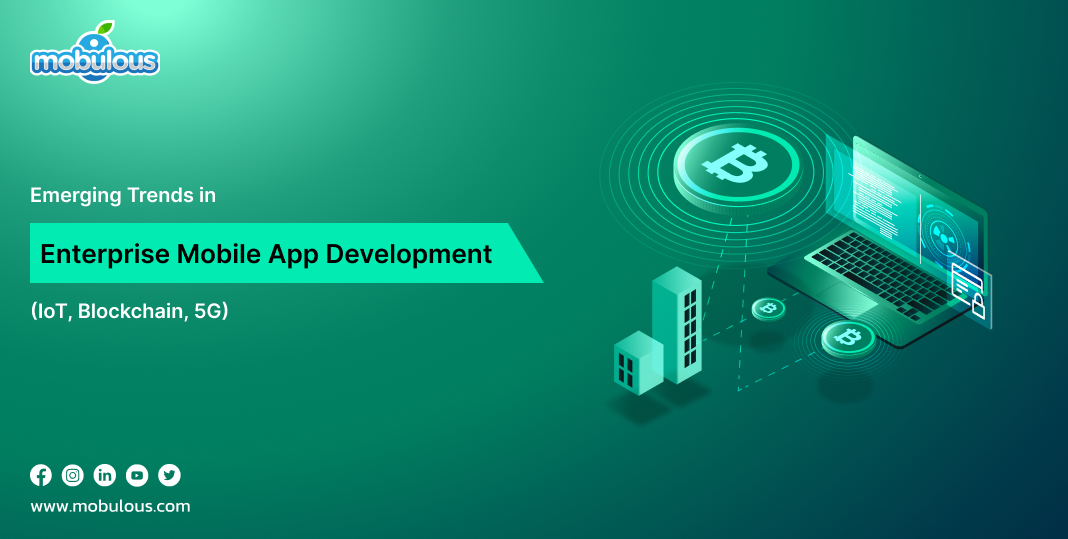
How IoT, blockchain, and 5G shape enterprise mobile apps development and enterprise app design and development choices.
Continue Reading
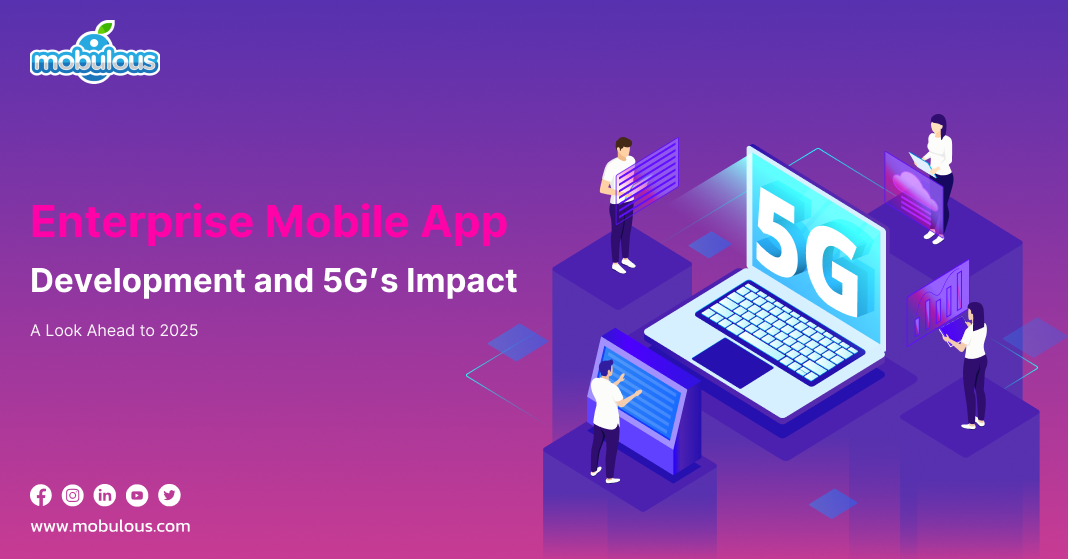
What 5G changes for mobile enterprise application development and enterprise mobile application development services.
Continue Reading

Scope drivers for fintech and payments products when compliance stays in discovery, not as a price guess.
Continue Reading
Settle integrations and API ownership, identity provider administration, distribution model, data classifications, security-review ownership, procurement and vendor onboarding needs, budget versus requirements ownership, any system being replaced, and who supports users after launch. The procurement readiness ledger on this page lists those items and who typically owns them.
Yes. A mutual NDA comes first, before detailed discussion of the product, data, or systems. Free functional and technical discovery calls follow under that NDA.
Stacks we use on shipped work include Swift and Kotlin for native apps, Flutter and React Native for cross-platform delivery, and PHP, Laravel, Node.js, React, Python, and related web stacks for APIs and companion surfaces. Framework choice follows the scope document and the systems the app must integrate with.
Scope determines cost. Free functional and technical discovery, plus an integration and access assessment against existing systems, produce a scope document before any proposal. Pricing reflects integrations, identity, distribution, and security-review constraints, not a generic range.
Yes. Distribution can be public App Store and Google Play accounts you own, internal distribution, or both. That decision belongs in discovery because it changes signing, MDM hooks, and release process.
Four months of free post-launch support is standard in every contract. Source code and IP transfer to the client on delivery.
Headquarters are in Noida, India (H-146/147, Sector 63, 201301). The US office is at 2035 Sunset Lake Road, Suite B-2, Newark, Delaware 19702. That is the only US location. Calgary, Alberta is a further verified office outside the US. More on the national path is on our mobile app development company in the USA page.
Mobulous holds ISO 9001:2015, ISO/IEC 27001:2022, and CMMI Level 3. We do not claim SOC 2, HIPAA, or PCI-DSS as certifications held. Where a product must meet HIPAA or PCI-DSS style requirements, those are treated as build-to-requirements constraints named with counsel in discovery.
Free discovery under mutual NDA for enterprise mobile apps development and enterprise app design and development. We map integrations, identity, distribution, and security review against what your side already owns. Related path: custom app development.
US office: 2035 Sunset Lake Road, Suite B-2, Newark, Delaware 19702 · +1 302 574 6634
Related reading: app development company, including mobile app development services.