It is broken
Crashes, failed releases, store rejections, or regressions after an OS update. You need triage and stabilisation, not a pitch deck for a rewrite you did not ask for.
An app maintenance company for products we did not build: bug fixes, app enhancement services, and ongoing mobile app support. We take over code from prior teams, AI coding tools, and no-code exports, then maintain, fix, and extend it.
You are not choosing a partner to invent a product from a blank brief. You need an app maintenance company for software that already exists: mobile application maintenance, app maintenance and support, or mobile app support when the original team is gone. If you need a greenfield build instead, that work sits with a mobile app development company on a different path.
Crashes, failed releases, store rejections, or regressions after an OS update. You need triage and stabilisation, not a pitch deck for a rewrite you did not ask for.
The product still matters, but the people who knew the codebase are gone. Feature work has to start from what is there, not from a clean-room fantasy.
A previous agency, freelancers, or an in-house team moved on. Documentation is thin. Access is scattered. Someone has to own the next release.
You need ongoing maintenance defined per engagement: what we fix, what we enhance, and what stays under your approval. No inherited free-support claim from a project we did not ship.
Most agencies decline code they did not write. We accept it for audit, and we maintain it when that is the honest call. Platform work after takeover may connect to iOS app development or Android delivery when a native path is already in place.
Codebases left behind when the original builders moved on. We start from repository access and what documentation exists, not from blame.
Apps assembled with AI coding tools. Patterns are often uneven. The audit checks consistency, tests, and whether the project can be built again from what is in the repo.
Apps built on or exported from no-code and low-code platforms. We look at lock-in, what is portable, and whether maintenance inside the platform is viable.
READMEs that stop at install, missing architecture notes, and tribal knowledge that left with the last developer. The audit surfaces that gap early.
Considerations a client faces when someone new opens the repository. Framed as things commonly found, not as claims about a named past project. Upstream scoping for product definition lives on app and product consulting when the brief is still being written; this audit is for code that already exists.
Automated tests that protect regressions, or a codebase where every change is a manual gamble.
Whether a clean machine can produce the same binary from what is in the repo and the notes that came with it.
Libraries that are years behind, abandoned packages, and advisories that already apply.
API keys, tokens, and credentials committed into history. Common on rushed and AI-assisted projects.
How sessions, roles, and tokens are implemented, and whether privilege boundaries hold.
What is stored where, encryption in transit and at rest, and retention habits that create risk.
What can leave the platform, what cannot, and whether maintenance means living inside that constraint.
Whether the codebase follows one style or many incompatible layers stacked by successive builders and tools.
Whether App Store, Play Console, certificates, and signing material are available and under your control.
Default split for a maintenance engagement on an app we did not build. Several rows are negotiable in the agreement. No response-time figures and no SLA clocks.
Support coverage, hours, and response expectations are defined per engagement. They are not a sitewide free window and they are not claimed as numbered SLAs here.
Six stages ending where ongoing maintenance begins. No week counts and no prices. Related delivery for net-new product work sits under mobile app development services.
Functional and technical discovery. Mutual NDA first, before we look at code or credentials.
Repository or export, build path, dependencies, secrets, auth, data handling, store access, and platform lock-in where relevant.
Written findings, including whether maintaining is the right call or whether a rebuild is the cheaper honest path.
Scope document first, then proposal and agreement built on that scope. Commercial terms follow the written findings.
Roles, keys, and environments you grant under the ownership split. Accounts stay yours.
Stop the bleeding, then add features. Ongoing maintenance continues under the engagement definition you signed.
Not every inherited codebase can be maintained economically. Some are cheaper to rebuild than to keep patching. The audit is what determines which situation applies, and the finding is reported either way. We will not sell a maintenance contract on a codebase that should be replaced.
Irreproducible builds, missing signing keys, abandoned frameworks, secrets baked into history, or no-code lock-in that blocks required changes.
A clear recommendation: maintain, stabilise then enhance, or rebuild. You decide with that written on the table.
That is a different engagement. We do not pretend maintenance pricing covers a rewrite.
Application maintenance services for inherited iOS, Android, and web app maintenance services needs. Mobile application maintenance covers stabilisation, security updates, store releases, and feature work when the audit says the base can carry it. App development and maintenance for net-new builds sits on the development pages; this page stays on takeover and support.
Reproduce, isolate, and ship fixes for defects that block users or releases. Stabilisation comes before feature ambition.
Routine patching inside agreed scope, with your approval when an upgrade changes behaviour or cost.
Feature work planned against the real architecture, not against a greenfield wishlist that ignores what is already shipping.
Help with builds, review notes, and compatibility work when OS or store rules change. Submission stays under your approval by default.
Reassemble credentials, store roles, and build paths when the previous team left without a clean exit.
Mobile app support & maintenance services defined per engagement: what is covered, who escalates, and how backlog priority is set. Not a blanket free window on code we did not ship.
Three live products across grocery, education, and logistics. Shown as shipped work under mobile app maintenance and support, including store listings you can open.
Online grocery for kirana items, dry fruits, pulses, spices, and cosmetics, with delivery for everyday household shopping.
Unified K-12 platform connecting students, parents, teachers, and schools for tutors, hiring, jobs, and stationery in one place.
EV delivery booking for customers and pilots: reliable, lower-cost, lower-emission transport in Delhi-NCR.
Buyers comparing app maintenance companies, mobile app maintenance company options, and app maintenance services in India need a partner that will open someone else's repository and tell the truth about it. Verified scale: 700+ apps delivered, 500+ clients across 30+ countries, 12+ years (founded 2013), 100+ experts, 4.7/5 Clutch (103 reviews). Certifications: ISO 9001:2015, ISO/IEC 27001:2022, CMMI Level 3.
Previous agencies, in-house handoffs, AI-assisted projects, and no-code exports are in scope for audit.
Free discovery, mutual NDA, then findings that say maintain or rebuild. Proposal follows the written scope.
Store, developer, and third-party accounts stay yours. We work through access you grant.
Feature work waits until the base can carry it. That order protects users and your reputation.
Coverage is written into the agreement for this takeover. We do not borrow free post-launch language from projects we built ourselves.
When the inherited app is native, work can continue alongside Android app development practices already in the stack.
"They have been easy to communicate with."
Verified on Clutch →"They were organized and easy to work with. We had weekly check-ins, and they always kept us updated. Everything was done on time, even with a tight deadline."
Verified on GoodFirms →"After the update, the app worked a lot better. They also finished things quicker than our last team and the quality was better. Always quick to reply and kept us in the loop."
Verified on GoodFirms →Mobulous rates 4.7/5 on Clutch (103 reviews), 4.8/5 on GoodFirms (65+ reviews), 5.0/5 on G2 (5 reviews), and 4.3/5 on Google Reviews. Clutch → · GoodFirms →
Reading for product owners

What to verify before you hire for build or ongoing mobile app maintenance and support.
Continue Reading
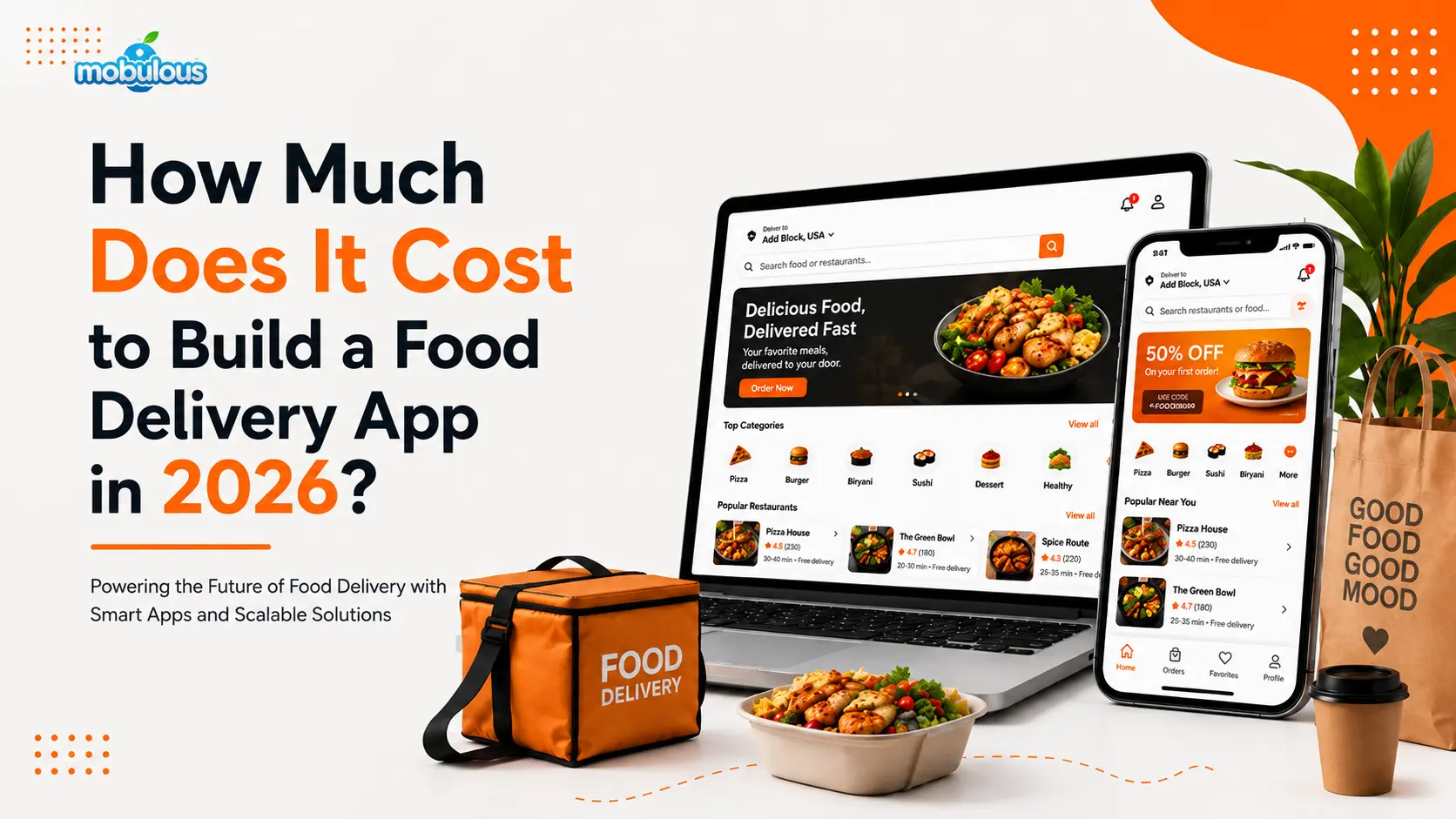
Scope drivers for food and grocery delivery products after launch and during maintenance.
Continue Reading

What shapes healthcare app budgets when compliance, updates, and support stay in scope.
Continue Reading
Yes. This page is for apps we did not build. As an app maintenance company we take over code from a previous agency or an in-house team that has moved on, after a mutual NDA and a code and access audit.
Yes. Apps built with AI coding assistants are in scope for audit and, where maintainable, for ongoing fixes and features. The audit looks at consistency, tests, secrets, and whether the build can be reproduced.
Sometimes. We assess platform lock-in, what is portable, and whether export or rebuild is the honest path. Some no-code apps are cheaper to rebuild than to maintain inside the platform constraints.
Enough access for a technical audit: repository or export, build instructions if any exist, store and developer account access where relevant, and credentials for environments you want reviewed. Free functional and technical discovery calls come first under a mutual NDA.
We say so. The audit findings report states whether maintaining is the right call or whether a rebuild is cheaper. The finding is reported either way. We do not force a maintenance engagement onto a codebase that cannot be maintained economically.
Yes. A mutual NDA is signed before detailed discussion and before we examine the repository.
Both, when the engagement says so. We stabilise first, then enhance. Feature work and bug fixes sit in the scope document and proposal after the audit.
They stay yours. Store and developer accounts remain under your ownership. We work through access you grant. Release approval and store submission defaults are agreed in the ownership split for the engagement.
Tell us what you inherited: agency code, in-house leftovers, AI-generated apps, or a no-code export. Mutual NDA before we open the repository. Audit findings before any proposal. Mobile app maintenance service and application maintenance services start with that audit. 700+ apps delivered, 100+ experts, 4.7/5 on Clutch (103 reviews).
Related reading: mobile application development company, including mobile app development services.