Blockchain consulting
Use-case fit, public versus permissioned trade-offs, data boundaries and regulatory questions before any contract is written.
Related: Mobile App Development Company · Mobile App Development Service
Blockchain app development services for consulting, enterprise and permissioned chains, wallets and dApps, scoped around what a deployed contract makes permanent. Mobulous is a blockchain software company headquartered in Noida, with offices in Newark, Delaware and Calgary, Alberta. Founded 2013. ISO/IEC 27001:2022 certified.
As a blockchain application development company, Mobulous scopes blockchain app development around consulting, enterprise blockchain networks, private blockchain development solutions, wallet integration, decentralized app development and Web3 product surfaces. Blockchain application development services still depend on the off-chain stacks Mobulous ships every day (PHP, Node.js, React, React Native, Flutter, Kotlin, Swift). Contract-level work is detailed on the smart contract development company spoke.
Use-case fit, public versus permissioned trade-offs, data boundaries and regulatory questions before any contract is written.
Consortium governance, who runs nodes, membership, privacy expectations and how hard it is to change operators later.
Custom blockchain application development against a written scope: chain choice, data boundaries, wallet model and what must stay off-chain. Contract upgrade and audit detail sits on the smart contract spoke.
Custodial versus non-custodial patterns, recovery, and what each model puts on the client versus the product.
Client apps that talk to contracts, indexers and wallets, with UX shaped by finality and fee volatility.
APIs, databases and mobile or web clients that treat the chain as one dependency inside broader blockchain software solutions.
Public networks such as Ethereum, Polygon, Solana or Binance Smart Chain commit you to open participation, public data by default, fee markets you do not control and an ecosystem of wallets and tooling. Permissioned or consortium networks (including Hyperledger-style designs) commit you to membership rules, operators who run nodes, and governance that can freeze or change participation. Private blockchain development solutions inherit operator risk and the need for clear upgrade and exit rules among members. Neither is universally better. Each locks different exit costs.
Anyone can observe on-chain writes. Throughput, finality and gas cost move with the network. Ecosystem context often includes wallets such as MetaMask or WalletConnect, and providers such as Infura or Alchemy for node access. Moving later means migrating users, liquidity assumptions and any contract addresses you published.
You decide who may validate and who may read. Governance and node operation become product and legal work. Privacy is stronger for business data, but you inherit operator risk and the need for clear upgrade and exit rules among members.
Throughput, cost, finality, ecosystem fit and how hard it is to move later belong in the scope document. Languages and toolchains such as Solidity or Rust, and standards such as ERC-20 or ERC-721, follow the chain decision. They are options a client faces, not a claim that Mobulous has shipped production contracts on each of them.
Ordinary software can ship a patch. A deployed smart contract cannot. That single fact changes design, testing, custody and launch. Each entry below is a permanence consequence: what becomes impossible, why, and what the build has to finish before deploy to survive it.
Bytecode on a live network is fixed. A defect in logic or access control stays until users migrate.
The build has to decide an upgrade or proxy pattern before any production code, or accept a full migration path with new addresses and user communication.
On-chain business logic that may need to change will fight the immutability model.
Rules that will evolve belong off-chain, with the contract holding only what must stay consensus-enforced.
Transfers that follow the contract are final for the chain, even when a human made a typing or routing error.
The build has to design confirmations, allowlists, limits and recovery policies in the product layer before users can move value.
Anything written on-chain is public and permanent for that network's observers.
The build has to decide what may never go on-chain: personal data, secrets, reversible commercial terms and anything that must be erasable under regulation.
There is no admin "undo" once a transaction is accepted under the network's finality rules.
The build has to model refunds, cancellations and dispute handling as new transactions or off-chain processes, not as edits to history.
Control of funds and admin roles follows keys. A lost private key is not an operations ticket.
Key management and recovery are product decisions: custodial models, multi-sig, social recovery or hardware policies must be chosen before launch.
Fee markets move with congestion. Users or the product pay under rules you set at design time.
The build has to decide who pays, how UX behaves when fees spike, and whether operations should batch, delay or move work off-chain.
Mainnet without an independent review treats users as the first real test of irreversible logic.
A third-party audit is a gate before mainnet, not a retrospective review after funds move.
Testnets miss production fee pressure, real adversary incentives, mainnet tooling quirks and some timing behaviours.
The build has to plan adversarial review, mainnet rehearsal where safe, monitoring and a rollback-or-migrate story that does not assume testnet fidelity.
Smart contract development, Solidity-oriented scopes, token interfaces, upgrade patterns and the third-party audit gate before mainnet are covered on our smart contract development company page. This hub stays on chain selection, enterprise and permissioned networks, wallets, dApps and Web3 product surfaces around that permanence constraint.
Wallet integration is where most users meet the chain. Custodial models put key risk on the operator. Non-custodial models put key risk on the user. Neither is free of product consequences.
The product holds keys or delegates them to a custodian. UX can feel familiar, but compliance, insurance, incident response and insider threat become part of the build. Recovery is an operations and policy problem.
Users keep keys through wallet apps or hardware. Ecosystem patterns often include MetaMask or WalletConnect-style flows. Support cannot "reset a password" for a lost seed. Education, backup prompts and clear failure states are product work.
Admin keys, upgrade keys and treasury keys need separation, multi-party controls and a documented recovery story before mainnet. Losing an admin key is not the same class of incident as losing a staging server password.
Chains are not databases. Storage is expensive, public by default on many networks and hard to erase. Most product data still belongs in ordinary stores. The chain holds what must be consensus-enforced.
State that must be independently verifiable: ownership proofs, settlement outcomes, membership attestations and rules that must not depend on a single operator's database.
Profiles, media, analytics, reversible commercial terms, PII and anything that must be corrected or deleted. Indexers and APIs then present chain events in a form apps can query.
Reading history, joining events and powering search usually needs an indexer or dedicated query layer. Designing that layer early avoids pretending the chain itself is a reporting database.
Rules for tokens, custody, consumer protection and data residency vary sharply by jurisdiction. Scoping must name where users, operators and assets sit before architecture freezes. This is a boundary conversation, not a claim of legal advice.
Fintech products that settle or reconcile across parties often raise the same permanence questions as this hub. Start with our fintech app development company page when the primary surface is payments, lending or banking UX rather than the ledger itself.
Cryptocurrency exchange platforms are a specialised build: order books or AMMs, custody, compliance workflows and liquidity operations. That work lives on our cryptocurrency exchange development company page, not as a competing section here.
Smart contract design, upgrade paths and the third-party audit gate before mainnet live on our smart contract development company page. This hub links there when the primary question is the contract itself.
NFT marketplace products are another specialised surface: listings, royalties, media storage and secondary sales. Details stay on our NFT marketplace development company page. This hub only names them as adjacent build types.
Buyers comparing blockchain app development companies, blockchain development agencies or a blockchain development service provider usually need the same sequence: fit, boundary, upgrade path, then code. Prototype work and full stack blockchain development services both start there.
Free functional and technical discovery calls. Mutual NDA before detailed discussion. Output is a clear chain and data-boundary recommendation, not a marketing deck.
Early testnet slices that prove wallet flows, contract boundaries and indexing before a mainnet commitment. A prototype is still governed by the same permanence rules as production logic.
When you need a blockchain app developer embedded with your product team for integration, contract review or client surfaces, scoping still names audit gates, custody and on-chain versus off-chain ownership.
dApp clients and off-chain systems against a written scope. Dedicated smart contract development and audit-gate detail live on the smart contract spoke.
Blockchain solution development for membership, settlement or attestation workflows where consensus-enforced state is the point.
Mobile and web clients in stacks Mobulous ships day to day, talking to contracts, indexers and custody choices named in scope.
Because a deployed contract cannot be patched like ordinary software, this flow front-loads decisions other builds defer. No week counts and no prices on this page.
Functional and technical discovery calls. Functional covers users, value movement and compliance questions. Technical covers chain type, on-chain versus off-chain data, wallets and upgrade needs. No cost, no obligation. A mutual NDA is signed before detailed discussion.
Public versus permissioned, what may never go on-chain and how keys are held. These decisions are written before design freezes screens that assume a network.
Discovery decisions become a scope document the client keeps. The proposal and agreement are built on that scope.
Decide which state is consensus-enforced and which stays in ordinary application systems. Detailed upgrade patterns, languages and the third-party audit gate are scoped on the smart contract development page when that is the primary work.
Implementation, automated tests and rehearsal on a test network. Wallet flows, fee UX and indexer behaviour are exercised against that environment.
Launch only after permanence constraints are accepted and any contract audit the client commissioned is complete or formally accepted. Contract audit process detail lives on the smart contract spoke.
Controlled deploy, address publication, monitoring and a communication plan for users and operators.
Source code and IP transfer to the client on delivery. Four months of free post launch support is standard in every contract.
These are common question areas for blockchain app development solutions and blockchain application services, not a claim of delivered chain projects in each sector.
Shared ledgers, reconciliation and custody boundaries when multiple parties must agree on state.
Attestations that must survive operator change, with most operational data still off-chain.
Permissioned participation, credentials and revocation rules that ordinary databases alone cannot settle between rivals.
Who runs nodes, how members join or leave and how upgrades are approved across organisations.
dApp clients, wallet UX and fee communication for users who are not chain specialists.
When device data needs shared attestations, a blockchain IoT software development company conversation starts with what must never go on-chain and who pays for writes.
Jurisdiction-specific constraints on tokens, custody and personal data that change architecture before code starts.
Free discovery calls treat upgrade paths, data placement and key custody as first-class decisions, not backlog items. That is the filter blockchain app development companies should pass before any bytecode conversation.
700+ apps delivered since 2013 across mobile and web stacks Mobulous ships every day (PHP, Node.js, React, React Native, Flutter, Kotlin, Swift). The chain is one dependency inside a product users actually open.
ISO 9001:2015, ISO/IEC 27001:2022 and CMMI Level 3. Mutual NDA before detailed discussion. Audit is treated as a mainnet gate in the engagement flow.
Source code and IP transfer on delivery. Four months free post launch support, standard in every contract. 500+ clients across 30+ countries. 100+ experts.
"Mobulous can be very demanding on themselves and always seemed to drive for a quick delivery."
Verified on Clutch →"Great team of developers who drove this 14+ month project as envisioned to successful completion. This is important as the scope of the project grew and became more complex over the life of the project. They incorporated iterations of ideas and embraced the technical difficulty of the project."
Verified on GoodFirms →"They were quick in understanding the requirements and in also providing valuable suggestions."
Verified on GoodFirms →Mobulous rates 4.7/5 on Clutch (103 reviews), 4.8/5 on GoodFirms (65+ reviews), 5.0/5 on G2 (5 reviews), and 4.3/5 on Google Reviews. Clutch → · G2 → · GoodFirms →
Blockchain app development is the design and build of software that uses a shared ledger for consensus-enforced state, together with the wallets, clients and off-chain systems around it. It includes consulting, permissioned networks, dApps and Web3 product surfaces. The hard constraint is permanence: deployed on-chain logic cannot be patched like ordinary application code. Contract-level engineering is covered on the smart contract development company page.
Blockchain software is any stack that reads or writes a shared ledger: nodes, contracts, wallets, indexers and the ordinary apps around them. Most of the product users touch is still conventional software. The ledger portion is only the state that must be consensus-enforced and treated as permanent once written.
Decide whether you need a new network at all. Most products build on an existing public or permissioned chain. Creating your own means choosing consensus, membership, who runs nodes, how upgrades happen and how wallets connect. For many teams, a permissioned network on known tooling is enough. A new chain is the wrong answer when an existing network already meets privacy, throughput and governance needs.
Yes. Most products keep the majority of data and UX off-chain and put only what must be consensus-enforced on-chain. Scoping starts with chain type, data boundaries, wallet model and an upgrade path before any mainnet deploy.
Learn distributed systems basics, cryptography at a practical level, wallet and node tooling, and how permanence changes product design. Hands-on testnet work matters more than theory alone. Contract languages and audit tooling are covered in depth on the smart contract development company page.
AI can help with monitoring, anomaly detection, support workflows and off-chain decisioning. Consensus and settlement still belong to the chain. Treat models as off-chain components with clear failure modes, not as substitutes for audited contract logic.
Safety is a stack: on-chain correctness, key custody, oracle trust and operational monitoring. Wallets add authentication and key storage, but they do not replace a recovery plan for admin keys. A bug in irreversible logic is a product incident, not a routine patch. Third-party contract audit process detail lives on the smart contract spoke.
It depends on the network. Client apps still use ordinary stacks such as JavaScript, TypeScript, Kotlin, Swift, React Native or Flutter. On-chain language choice follows chain selection in scoping and is detailed on the smart contract development company page.
Shared ledgers remain useful where multiple parties need a single source of truth without trusting one operator's database. Fit is narrow: permanence, fees and regulation eliminate many casual use cases. The durable question is whether consensus-enforced state is worth those costs for your specific workflow.
You can run a permissioned network with chosen consensus, membership and node operators, or fork and operate a public-style chain. That path means you own security, upgrades, tooling and governance. For most products, building on an existing public or consortium network is the better answer. A new chain is justified when membership, privacy or performance requirements cannot be met without operating the network yourself.
There is no single best answer. Rank partners by how clearly they explain immutability, key custody and on-chain versus off-chain boundaries. Ask for mutual NDA, free discovery calls and verified ratings. Mobulous has delivered 700+ apps since 2013, rates 4.7/5 on Clutch (103 reviews) and 4.8/5 on GoodFirms (65+ reviews), and holds ISO/IEC 27001:2022.
Custom blockchain app development is a scoped engagement: chain choice, data boundaries, wallet model and off-chain product surface written before code. Contract upgrade and audit detail belongs on the smart contract spoke when that is the primary work. Mobulous runs free functional and technical discovery calls under mutual NDA, then a proposal. Source code and IP transfer to the client on delivery, with four months free post launch support standard in every contract.
Look for engineers who can defend custody choices and what never belongs on-chain, not only list chain names. When you hire a blockchain developer, insist that irreversible logic has a clear launch plan and that client apps are built in stacks your team can maintain. Mobulous fields 100+ experts across product engineering stacks evidenced in day-to-day delivery.
Prefer a team that explains immutability consequences, key custody and on-chain versus off-chain boundaries in plain language. Ask for a mutual NDA, free discovery calls and verified ratings. Mobulous has delivered 700+ apps since 2013, rates 4.7/5 on Clutch (103 reviews) and 4.8/5 on GoodFirms (65+ reviews), and holds ISO/IEC 27001:2022.
Cost follows the scope document from free functional and technical discovery calls. Chain type, wallet model and off-chain product surface change the proposal. Mutual NDA before detailed discussion. No fixed price is published on this page.
Related reading
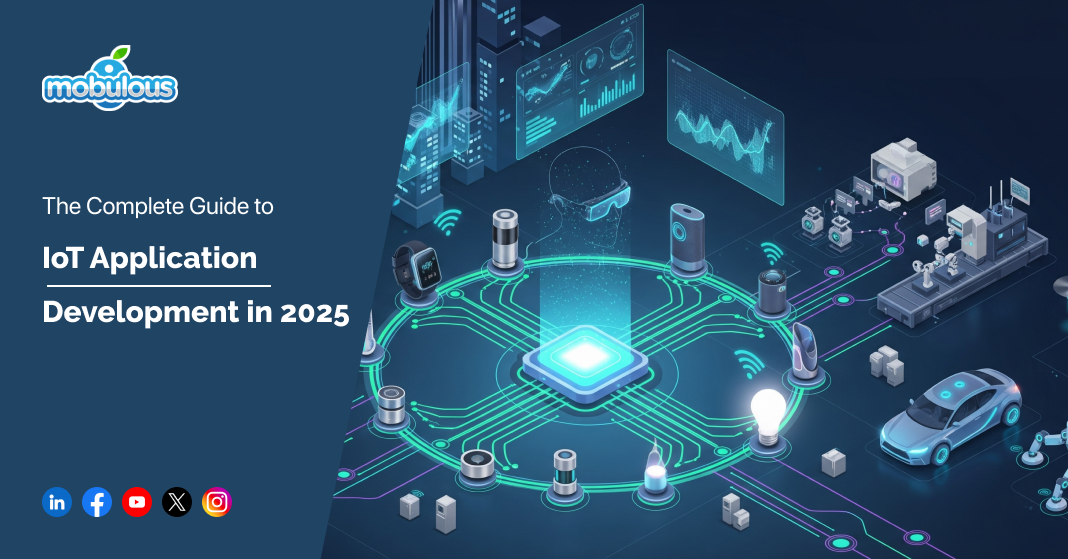
Device, network and app layers when sensor data may later need attestations or shared ledgers beside ordinary IoT stacks.
Continue Reading
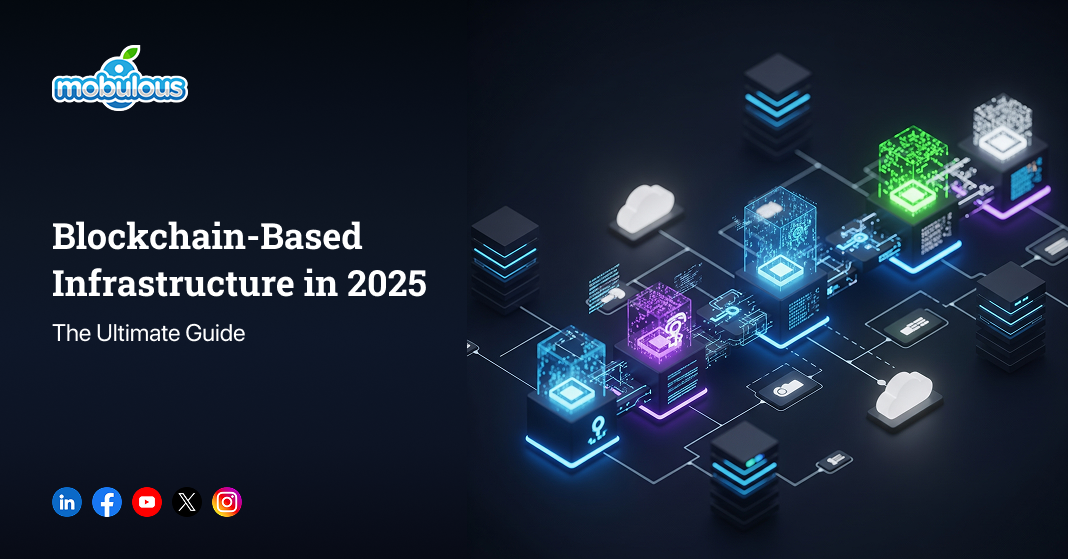
Ledger, consensus and immutability basics that sit under blockchain application development and private network scoping.
Continue Reading
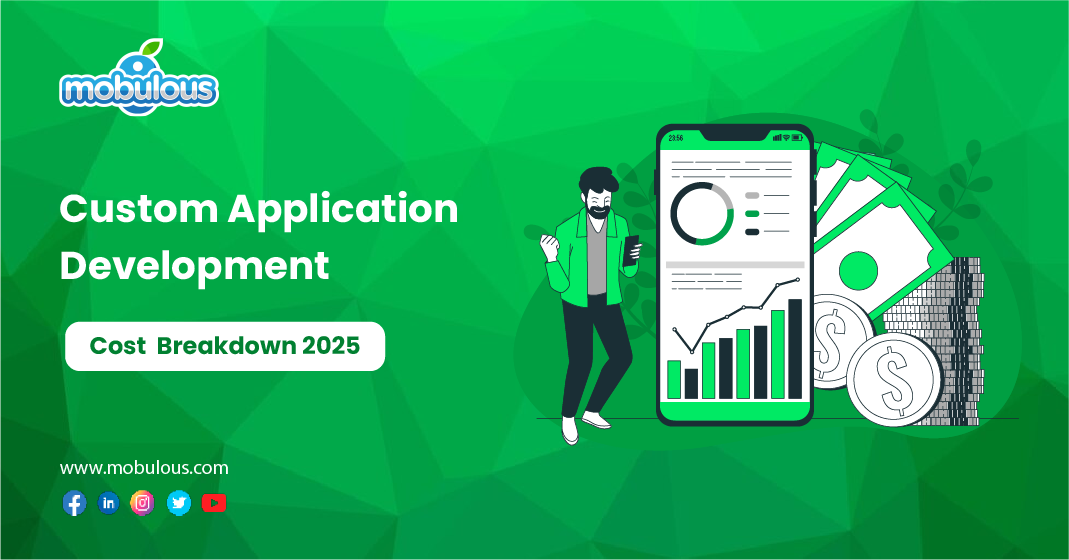
How custom product scope breaks into design, engineering and delivery cost drivers before any chain-specific proposal.
Continue Reading
Talk through chain choice, permanence constraints and wallet models before any proposal. 700+ apps delivered, 500+ clients, 12+ years, 4.7/5 on Clutch (103 reviews). Mutual NDA before detailed discussion. ISO/IEC 27001:2022.
Related: Fintech · Crypto Exchange · Smart Contract · NFT Marketplace.
Also: Web Application Development · AI Development.
Related reading: Mobulous, including cryptocurrency exchange development, including fintech app development, including mobile app development services.