


















People want to stay informed about their health but not at the cost of spending 45 minutes reading through long-form medical articles every morning. Wholesome was built to solve exactly that: a clean, fast, ad-free health news app that uses AI to turn trusted health journalism into short, readable summaries. Open the app, spend three minutes, and you are genuinely up to date on what matters in nutrition, fitness, mental health, and medical research.
The client, Wholesomebywh LLC, came to Mobulous with a clear product concept and a high design standard. The app had to feel calm and focused — no clutter, no notifications designed to create anxiety, no business model built on attention hijacking. It needed AI-generated summaries that were genuinely accurate, a daily content refresh that pulled from reliable sources, and a cross-platform experience that worked identically on Android and iOS.
This case study covers how Mobulous approached the health news app development, the technical problems we solved, and what the finished product delivers.
Check Out: Top News App Development Company
The Product Brief: What Wholesome Set Out to Be
The wellness information market is crowded, but most of it is either too long to read daily, too unreliable to trust, or too ad-heavy to enjoy. Wholesome’s positioning was simple: be the opposite of all of that. Trusted sources, AI-condensed summaries, a minimal interface, and a daily refresh that makes staying informed feel effortless rather than exhausting.
The app was designed to work for anyone who cares about their health but does not have the time or appetite to read the full articles behind every headline. That is a broad audience, which made the user experience challenge interesting: the app had to feel sophisticated enough to appeal to health-conscious professionals, while being simple enough for anyone to pick up and use immediately.
Mobulous was brought in to handle the complete build: UI/UX design, front-end development in React Native and React.js, backend infrastructure in Node.js and PHP, AI integration, and launch on both the Google Play Store and the Apple App Store.
What We Built: Features of the Wholesome App
- AI-Powered Health News Summaries
The defining feature of Wholesome is its AI summarisation engine. Full-length articles from verified health and wellness sources are processed by the AI and condensed into short, clear summaries that preserve the key facts without diluting accuracy. A reader gets the substance of a 1,500-word medical research piece in under 60 seconds.
Building an AI summariser that handles health content specifically — where accuracy is not optional and medical terminology needs to be understood, not garbled — was the most technically demanding aspect of this project. We will cover the approach in the challenges section below.
- Daily Content Refresh
Wholesome updates its feed every day with new content across nutrition, fitness, mental health, and medical research. Users who open the app each morning see a genuinely fresh set of summaries, not the same content recycled with a new timestamp. The daily refresh is driven by automated ingestion from reliable news APIs, processed through the summarisation pipeline, and delivered to users without manual editorial intervention.
Managing that pipeline reliably, at scale, every day without failure required careful backend architecture. The system had to handle high content volumes, validate source reliability, and deliver updates without latency.
- Clean Minimal Design
Wholesome has no ads, no pop-ups, and no attention-hijacking design patterns. The interface is deliberately calm — readable typography, considered white space, and a visual hierarchy that puts the content first and everything else second. This sounds simple to achieve. In practice, designing a minimal interface that still feels complete and does not come across as unfinished required extensive iteration.
The design brief was to make health news consumption feel like a quiet morning habit rather than a task. Every screen was tested against that standard before it was approved.
- Cross-Platform Availability on Android and iOS
Wholesome is available on both Google Play and the Apple App Store, built in React Native to run natively on both platforms from a single codebase. The experience on Android and iOS feels identical in terms of speed, navigation, and visual fidelity. Cross-platform parity in a content-heavy app with AI-driven features requires consistent testing across both operating systems at every stage of development.
- User-Friendly Navigation
The app is designed to be usable immediately, without onboarding instructions. Users can find, read, and navigate between content categories without any learning curve. This was a specific design requirement from the client — the app needed to be accessible to older users who are health-conscious but not highly tech-savvy, as well as to younger users who expect instant intuitiveness. Achieving that across a genuinely wide age range required multiple rounds of usability testing.
Also Read: Cost to Build a Healthcare App in India.
How to Install the Wholesome App from Google Play & App Store
Installing Wholesome on Android (Google Play Store)
Step 1: Open the Google Play Store on your phone.
Step 2: Type “Wholesome” in the search bar.
Step 3: Look for the app by Wholesomebywh, LLC.
Step 4: Tap the “Install” button. Wait for the app to download.
Step 5: Once it’s done, tap “Open.” The app is ready.
You can now read daily health news with ease.
Link:
https://play.google.com/store/apps/details?id=com.wholesome.wellness&pcampaignid=web_share
Installing Wholesome on iOS (Apple App Store)
Step 1: Go to the App Store on your iPhone or iPad.
Step 2: Search for “Wholesome.”
Step 3: Find the app by Wholesomebywh, LLC.
Step 4: Tap “Get.” Use your Face ID, Touch ID, or password to confirm. The app will download.
Step 5: When it’s done, tap to open.
You can now enjoy health updates on your Apple device.
Link:
https://apps.apple.com/in/app/wholesome-your-wellness-buddy/id6740557794
How Mobulous Built Wholesome: The Development Process
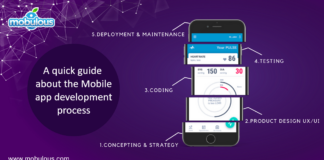
Step 1: Research and Planning
We began with a structured research phase: mapping the existing health news app landscape, identifying what was missing, and understanding the specific behaviour of users who consume wellness content daily. The key insight was that most health news products fail on one of three dimensions — trustworthiness, speed of consumption, or visual noise. Wholesome was designed to excel on all three simultaneously. Planning sessions with the client translated those findings into a prioritised feature set and a technical specification.
Step 2: UI/UX Design
The design process started with the reading experience and worked outward from there. Typography, contrast ratios, content card sizing, and spacing were all calibrated to make reading comfortable on both small and large screens. The colour palette was chosen to feel calm rather than clinical. We went through multiple design rounds before the interface felt genuinely settled rather than just functional. The client’s requirement for a distraction-free experience influenced every single design decision.
Step 3: Front-End Development
The mobile front end was built in React Native, enabling a single codebase to run on both Android and iOS without the performance compromises that plagued earlier cross-platform frameworks. The web-adjacent components used React.js. React Native gave us the native rendering performance we needed for smooth scrolling and fast content loading in a news consumption context, where lag or jitter in the reading experience is particularly noticeable.
Step 4: Back-End Development
The backend runs on Node.js and PHP, handling news API ingestion, content queuing for the AI summarisation pipeline, user data management, and delivery of processed summaries to the front end. The system was built to handle the daily content refresh reliably without manual intervention and to scale as the user base grows. Performance under load was a specific design criterion — a news app that slows down during peak morning usage is a news app people stop opening.
Step 5: Quality Assurance and Testing
QA on Wholesome covered four dimensions: feature accuracy, cross-device performance, AI summary quality, and load performance. The app was tested on a range of Android and iOS devices across different screen sizes and OS versions. AI summary accuracy was evaluated against the source articles by human reviewers. Load testing confirmed the backend could handle concurrent users without degrading performance. We ran multiple QA cycles before approving the build for submission.
Step 6: Launch and Deployment
Both the Google Play and App Store submissions followed platform-specific guidelines carefully to avoid rejection delays. Mobulous managed the submission process and provided post-launch support to address any early user-reported issues quickly. The client received a stable, well-reviewed app on both stores.
The Technical Challenges We Solved
Building an AI Summariser That Gets Health Content Right
Generic AI summarisation tools struggle with medical and health content because the field uses precise terminology where small inaccuracies matter. A summary that misrepresents a nutrition study or softens a health warning is not just unhelpful — it is potentially harmful. We trained and tuned the summarisation model specifically for health and wellness content, with a focus on preserving factual accuracy, handling medical terminology correctly, and producing summaries that a non-specialist reader can understand without losing the key point of the original article.
This took significantly more iteration than a standard AI integration. The bar for what counted as an acceptable summary was deliberately set high, and we ran evaluation cycles until the output consistently met it.
Connecting to Reliable Health News APIs
Not all health news APIs deliver verified, high-quality content. We tested multiple providers against criteria including source credibility, update frequency, content depth, and API stability. Several providers that looked adequate in initial testing failed on reliability or content quality over sustained evaluation periods. The final selection of APIs gives Wholesome a feed that users can actually trust — which is the entire premise of the product.
Achieving True Cross-Platform Parity
React Native handles the majority of cross-platform differences well, but there are always edge cases where Android and iOS behave differently — particularly in text rendering, scroll behaviour, and notification handling. We identified and resolved these discrepancies through systematic testing on both platforms at each development stage rather than treating them as post-launch fixes. The result is an experience that genuinely feels the same regardless of which device a user picks up.
Designing Minimalism That Feels Complete
A minimal design that looks considered is harder to achieve than a feature-rich design that looks busy. The risk of a stripped-back interface is that it reads as unfinished or lacking confidence. We went through multiple design iterations on Wholesome to find the version of minimal that felt deliberate rather than empty — where the absence of elements was clearly a choice, not a gap. The final design achieves that, and it is one of the things users comment on most positively.
Managing Daily Content Volume Without Performance Degradation
A daily content refresh means the backend is processing a significant volume of new articles, running them through the summarisation pipeline, and distributing the results every single day. The system also needs to handle traffic spikes during morning peak usage when a large portion of the active user base opens the app within the same two-hour window. We built the backend with load-aware queuing and content caching to ensure that neither the ingestion pipeline nor the delivery layer becomes a bottleneck under normal operating conditions.
What Wholesome Delivers Today
Wholesome is live on both the Google Play Store and the Apple App Store, published under Wholesomebywh, LLC. The app is in active use by health-conscious users who want fast, trustworthy wellness news without the noise of a general news feed or the length of long-form health journalism.
The combination of AI summarisation, daily refresh, and a genuinely ad-free minimal design positions Wholesome clearly in the market. For Mobulous, the project added a working AI integration to our mobile development portfolio in a domain — health tech — where accuracy requirements are higher than in most other app categories.
What This Project Means If You Are Building a Health or News App
Wholesome is a useful reference point for any founder building a content-driven mobile app, particularly one in the health or wellness space where trustworthiness and user experience standards are unusually high.
A few things this project illustrates clearly: AI integration in a health context requires domain-specific tuning that generic AI tools do not provide out of the box. The quality bar for summaries that touch medical or health topics is meaningfully higher than for other content categories, and the iteration required to reach that bar should be factored into any project timeline.
Minimal design is not a shortcut to faster development — it often takes longer to achieve than a feature-heavy interface because every element that remains has to justify its presence. And cross-platform parity in a content consumption app is not guaranteed by choosing React Native alone; it requires deliberate testing on both platforms throughout the build.
If you are planning a health app, news app, or AI-powered content product and want to speak with a team that has built one, we are happy to start that conversation.
About Mobulous
Mobulous is a mobile app development company. We design and build iOS and Android applications for startups and growth-stage businesses across health tech, edtech, fintech, agriculture, and consumer sectors. Wholesome is one of a growing number of AI-integrated mobile products in our portfolio.
If you have a mobile app concept and want to explore how to build it properly, reach us at mobulous.com/contact or Sales@mobulous.com.
Frequently Asked Questions
How much does it cost to develop a health news app with AI summarisation?
A health news app with core features — news feed, basic summaries, and cross-platform delivery — typically starts around $25,000 to $45,000. A full-featured product like Wholesome, which includes custom AI summarisation tuned for health content, reliable API integration, daily content pipeline automation, a clean minimal design system, and dual-platform launch on iOS and Android, typically falls in the $60,000 to $110,000 range depending on the depth of AI tuning required and the number of content sources integrated. We provide a detailed estimate before any project begins.
How long does it take to build an AI-powered mobile app?
For a dual-platform app with a custom AI integration and a backend content pipeline like Wholesome, a realistic timeline is four to six months from finalised requirements to app store launch. Apps with lighter AI requirements or a smaller feature set can ship in eight to twelve weeks. AI-specific work — training, tuning, and evaluation cycles — is the variable that most commonly extends timelines in this type of project and should be scoped with buffer built in.
Does Mobulous have experience integrating AI into mobile apps?
Yes. Wholesome is a live example of an AI integration built and maintained by Mobulous, where the AI component — article summarisation tuned specifically for health content — is a primary product feature rather than a supplementary tool. We are experienced in integrating AI APIs, fine-tuning models for specific content domains, and building the evaluation pipelines needed to ensure output quality meets a publishable standard.
Can Mobulous build apps that work on both Android and iOS from one codebase?
Yes. React Native is our standard framework for dual-platform mobile development. Wholesome is built in React Native and runs natively on both Android and iOS with a consistent interface and performance profile. We test on both platforms throughout the development process, not just at the end, which is what produces genuine cross-platform parity rather than an iOS app with an Android port.
Does Mobulous build ad-free or subscription-based apps?
Yes. We build apps for a wide range of business models including ad-free products, subscription tiers, one-time purchase, and freemium structures. Wholesome was built as an ad-free product, which shaped the backend architecture — there is no ad serving infrastructure, no tracking SDK overhead, and no performance compromise from advertising integrations. If your product’s value proposition depends on being clean and distraction-free, that is a model we are comfortable building for.