1. Web Portals & Customer Portals
Customer and partner portals give different user groups secure, permission-based access to one shared system. The hard part is correct role design and data isolation, not the page layouts themselves.
Mobulous helps startups, SMEs, and enterprises with cloud application development — design, build, migrate, and scale cloud apps that stay reliable as usage grows. As a mobile app development company founded in 2013, we treat application development for the cloud as infrastructure and runtime work, not a synonym for every software engagement. If your roadmap depends on scalable cloud services customers and teams can trust every day, here's how we approach it.
Broader cloud software development outside this hub sits on our software development company page. Discovery calls are free. A mutual NDA comes before detailed discussion.
From cloud-native builds to migration and ongoing optimization, our cloud application development services cover the full lifecycle of cloud-based application development and cloud app development — not a one-off go-live. When connected mobile clients are part of the release, the same team delivers them through our mobile app development services. Backend contracts and third-party connectors are owned on our API development services page.
Cloud-native applications (cloud native apps) are designed from the ground up for application development in the cloud rather than adapted from on-premises software. This solves the scaling and deployment friction older architectures create. Startups building a new product and enterprises launching new digital lines both benefit, gaining applications that deploy faster, recover from failure gracefully, and scale on demand.
When the commercial model is subscription SaaS with tenant isolation and entitlements, that work sits on our SaaS development company page — we keep SaaS business-model design there, and keep this page focused on where and how the application runs in the cloud.
Cloud architecture and infrastructure cloud computing choices define how compute, storage, networking, and cloud infrastructure technology fit together for performance, cost, and resilience — including designs that span more than one cloud platform. Businesses with compliance requirements, disaster-recovery needs, or vendor-risk concerns typically need this. The payoff is scalable cloud solutions that avoid single points of failure and adapt as workloads change. Our designs follow principles from the AWS Well-Architected Framework, the Microsoft Azure Architecture Center, and the Google Cloud Architecture Framework when those platforms are in scope.
DevOps and CI/CD pipelines automate how code moves from a developer's machine to production, with testing and checks at every stage. Teams that ship frequently or maintain multiple environments need this most, since manual releases become a bottleneck and a risk. The result is faster, safer releases with fewer surprises after deployment.
Cloud platforms make it practical to run data pipelines, model training, and AI inference at scale without owning hardware. Businesses that want to build recommendation engines, predictive analytics, or generative AI features into a product need this data and compute foundation in place first. It results in AI capabilities that stay fast and cost-predictable as data volume grows.
Serverless architecture lets application logic run on demand without managing dedicated servers, so you pay for actual usage rather than idle capacity. It suits event-driven workloads, background processing, and unpredictable traffic patterns, common in early-stage products validating demand. Businesses get lower operational overhead and infrastructure that scales down as easily as it scales up.
Each row stands alone. Use it to pick an architecture before spend locks in — and to kill the wrong default before it burns budget.
| Workload pattern | Recommended architecture | Why | When this is the wrong call |
|---|---|---|---|
| Spiky / event-driven traffic | Serverless functions + managed queue + auto-scaled API gateway; pay-per-invocation compute. | Idle capacity is near zero between spikes; cold starts are acceptable for async or bursty jobs; cost tracks actual events. | Always-on VMs or oversized Kubernetes nodes sitting idle 20+ hours/day — you pay for capacity you never use and still miss the spike if autoscaling is misconfigured. |
| Steady high-throughput APIs | Containerized services (Kubernetes or managed containers) behind a load balancer; horizontal pod autoscaling on CPU/RPS. | Warm capacity avoids cold-start latency; predictable RPS maps cleanly to replica counts; rolling deploys keep uptime during releases. | Pure serverless for every request path when p99 latency SLAs are tight — cold starts and concurrency limits show up as timeouts under sustained load. |
| Data-heavy batch / analytics | Object storage + scheduled batch jobs or managed data warehouse/ETL; separate compute from the user-facing app tier. | Batch windows tolerate minutes of runtime; storage cost stays low at rest; app APIs are not blocked by heavy queries. | Running overnight aggregates on the same primary OLTP database as production traffic — query contention spikes latency and can lock tables during business hours. |
| Latency-sensitive user-facing apps | Regional app tier + CDN for static assets + caching layer (e.g. Redis) in front of hot reads; connection pooling to the primary DB. | Most user waits are network and cache misses; keeping hot data close to the region cuts round-trips without rewriting the product. | Single distant region for a global audience with no CDN or cache — every page load pays full RTT, and DB round-trips compound into abandoned sessions. |
| Regulated / data-residency workloads | Region-pinned resources, encrypted storage (in transit and at rest), private networking, audit logging, and IAM boundaries documented per data class. | Residency and access controls are infrastructure facts auditors can check; encryption and logs are designed before data lands, not after an incident. | Default multi-region replication “for resilience” that copies personal or clinical data into a forbidden region — compliance fails even if the app still works. |
Enterprise cloud applications and applications on the cloud need scalability, security, integration, and reliability built in from the first architecture decision, not added after launch — the same bar buyers use when shortlisting a cloud application development company for enterprises. Browser-delivered portals without a cloud infrastructure focus sit on web application development; product lifecycle ownership sits on product development company work.
Customer and partner portals give different user groups secure, permission-based access to one shared system. The hard part is correct role design and data isolation, not the page layouts themselves.
Operational dashboards support reporting, approvals, and exception handling for internal teams. They need to stay fast under real data volumes and log who changed what, for accountability.
Subscription SaaS with billing and tenant workspaces is covered on our SaaS development company page — here we focus on the cloud runtime, isolation boundaries, and APIs those products need underneath.
Internal tools such as CRM systems, compliance databases, and workflow consoles run behind a login, where security and clarity matter more than public visibility or search performance.
Cloud applications need ongoing monitoring, patching, and enhancement after launch, not a one-time build. Our engagements include structured post-launch support, so issues get caught before customers notice them.
Custom dashboards turn operational and business data into decisions, combining charts with underlying query design and caching so the numbers stay accurate and load quickly at scale.
Cloud application patterns adapt to industry-specific workflows, data sensitivity, and compliance needs. Here's how cloud applications typically support different sectors.
Businesses use cloud infrastructure to run generative AI features such as content drafting, summarization, and personalization inside existing products without managing GPU hardware themselves.
Cloud applications support digital wallets, KYC onboarding, and transaction processing where security, uptime, and auditability are non-negotiable requirements for regulators and users alike.
Cloud platforms help healthcare organizations manage appointments, patient records, teleconsultation, and cross-location communication under the access controls and audit logging that clinical data requires.
Cloud-based applications handle product catalogs, checkout, and order tracking that must stay fast and available during traffic spikes like sales events or seasonal demand.
Fleet and passenger transport applications rely on cloud infrastructure for live location tracking, dispatch logic, and route data that has to stay accurate at scale.
Cloud applications connect fleet management, delivery tracking, and route optimization so dispatchers and drivers work from the same real-time data, even across regions.
Education platforms use cloud infrastructure to deliver content, track learner progress, and support live or recorded sessions for students, parents, teachers, and institutions.
Property platforms use the cloud for listing management, search, and owner-tenant workflows that need to stay reliable as inventory and users grow.
Food ordering platforms depend on cloud applications for menu management, live order tracking, and multi-app coordination between customers, restaurants, and delivery riders.
Travel and hospitality applications use the cloud for booking engines, itinerary management, and integrations with third-party inventory that must stay in sync in real time.
On-demand service apps, whether for people, food, or freight, need cloud infrastructure for booking, dispatch, and live tracking that performs consistently under variable demand.
Wellness and fitness platforms use cloud applications for scheduling, subscription management, and progress tracking that keep users engaged across devices and locations.
Media and publishing platforms rely on cloud infrastructure to handle high-volume content delivery, video, and traffic surges around breaking news or popular releases.
Social and community applications need cloud architectures built for engagement and moderation at scale, where growth itself becomes the primary technical challenge.
Recurring-revenue SaaS products need multi-tenant cloud runtimes; commercialization and billing design live on our SaaS development company page.
Agri-tech platforms use cloud applications to connect field data, supply chain tracking, and marketplace access for farmers, buyers, and distributors across regions.
Our process shows how to build a cloud application and how to build cloud application programmes end to end — strategy through architecture, build, automation, optimization, and long-term support, with visibility at every stage.
We start by understanding your business goals, current systems, and constraints, whether you're starting cloud based app development or evaluating a migration. This stage clarifies scope, risks, and priorities before any architecture or code decisions are made, so later stages build on a shared, documented understanding.
We define the application's cloud architecture: how app development cloud services, data, and infrastructure fit together to meet your performance, security, and cost targets. Decisions on rendering strategy, authentication, and data models happen here, since reversing them after development starts is expensive and disruptive to timelines.
Development or migration proceeds against the agreed architecture and scope — the stage where you build cloud application features and move workloads — with role-based access and API contracts defined before implementation. For migrations, this includes moving data and workloads to the cloud platform with minimal disruption to existing operations.
We implement automation for deployment, testing, and infrastructure provisioning where it reduces manual effort and release risk. Automated pipelines mean code moves through testing and staging consistently, catching issues before they reach production rather than after users report them.
Once the application is running, we review performance, cost, and reliability under real usage patterns, not just staging conditions. This includes query and caching improvements, right-sizing infrastructure, and addressing bottlenecks that only surface once actual traffic and data volumes are in play.
After launch, applications need monitoring, patching, and ongoing enhancement. We provide structured post-launch support so defects, dependency updates, and evolving requirements are handled proactively, keeping the application dependable as your business and its usage patterns change over time.
We select cloud platforms, databases, and tooling based on what a project actually needs, across the following categories. Naming AWS, Azure, or GCP as build targets is about fit — not a claim of partner certification.
Choosing a cloud application development company — including teams comparing cloud app development companies for enterprises — is a decision about who will still be available after launch. Here's what informs how Mobulous approaches cloud computing application development, and where we're transparent about what to verify yourself.
Our engineering teams work across major cloud platforms including AWS and Azure, choosing services based on your workload rather than defaulting to one vendor. If a specific certification or partnership status matters for your procurement process, we recommend confirming current standing directly before contracting.
We design serverless components where event-driven or variable-traffic workloads make sense, reducing the operational burden of managing dedicated servers. This is applied selectively, alongside containerized and traditional infrastructure, based on what actually fits the application's traffic and cost profile.
Cloud application software development we deliver is architected around your specific data model and workflows rather than a generic template, with scalable cloud services considered from the initial design rather than retrofitted after a system starts to strain under real usage.
Our processes are certified to ISO/IEC 27001:2022 for information security and ISO 9001:2015 for quality management, with CMMI Level 3 appraised delivery practices. For regulated products, we build toward the relevant framework, including HIPAA-aligned data handling for healthcare and GDPR/DPDP-aligned practices for personal data.
Engagements include a named point of contact and direct access to the people building your application, not a rotating support queue. Questions about architecture, timeline, or trade-offs get answered by someone who understands the actual codebase.
Whether you need a fixed-scope build, a dedicated team working your backlog, or staff augmentation to extend an in-house team, our engagement models are structured to scale with your product as requirements evolve, without renegotiating from scratch each time.
A positive and creative team who see opportunities instead of problems when presenting new ideas. We can highly recommend Mobulous to the construction of your new exciting project.
Verified on Clutch →We constantly focus on the simplicity of our payment APIs. Our goal is for an external customer to be able to gain access to our Sandbox environment and to be executing API calls within 48 hours. Even though our APIs are simple to work with, they are extremely powerful under the covers.
Verified on GoodFirms →Other Services great experience, Easy to work with, Very honest and straight farward
Verified on GoodFirms →Mobulous rates 4.7/5 on Clutch across 103 verified reviews. Clutch → · GoodFirms →
Portfolio items below are drawn from our delivered-apps evidence set, favoring products with documented server/backend stacks. No invented uptime, cost-saving, or load metrics. See more in the portfolio.
Client: iBuild
Cloud-based residential building software for builders and project managers, covering scheduling, budgets, documents, and multi-stage construction workflows.
Stack on record: Node.js · React.js
Client: Homies4U · India
Student accommodation platform with web and app surfaces, landlord portal, listing search, and booking availability backed by a Node.js stack.
Platforms: Android, Web · Stack: React JS, Node.js, HTML5, Kotlin, Swift
Client: Edlas
Education platform connecting schools, teachers, guardians, and students on a web product with Node.js and React layers.
Platforms: Web · Stack: React Native, React JS, Node.js
Client: LIFE (Legal Initiative for Forest and Environment)
Environmental law database for South Asia with Android and web clients on a Node.js and MongoDB backend.
Platforms: Android, Web · Stack: React JS, HTML, Node.js, MongoDB
Client: Aqar 55 · Saudi Arabia
Map-based property search for buy, rent, and sell listings with in-app chat, backed by a Node.js stack.
Platforms: iOS, Android · Stack: Nodejs
Client: Jobyoda
BPO job search web platform with recruiter connection, recommended jobs, and apply history across live openings.
Platforms: Web · Stack: HTML, CSS, PHP
Cloud insights
Articles that support cloud application development decisions: cloud-native architecture, AI inside SaaS products, and how buyers map application software types when scoping a build.
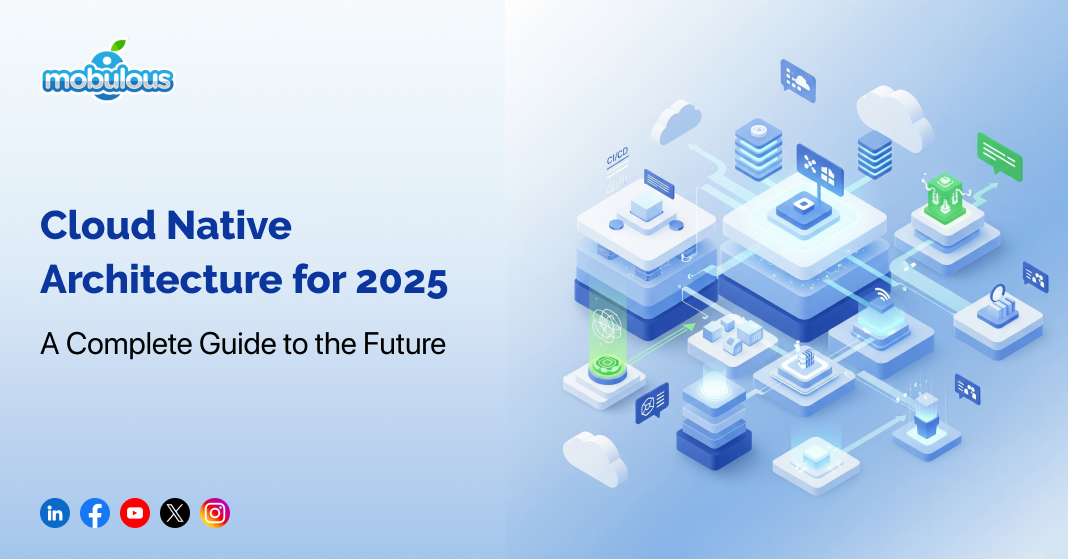
How cloud-native applications are structured for scale, deployability, and recovery — not just lifted onto cloud VMs.
Continue Reading
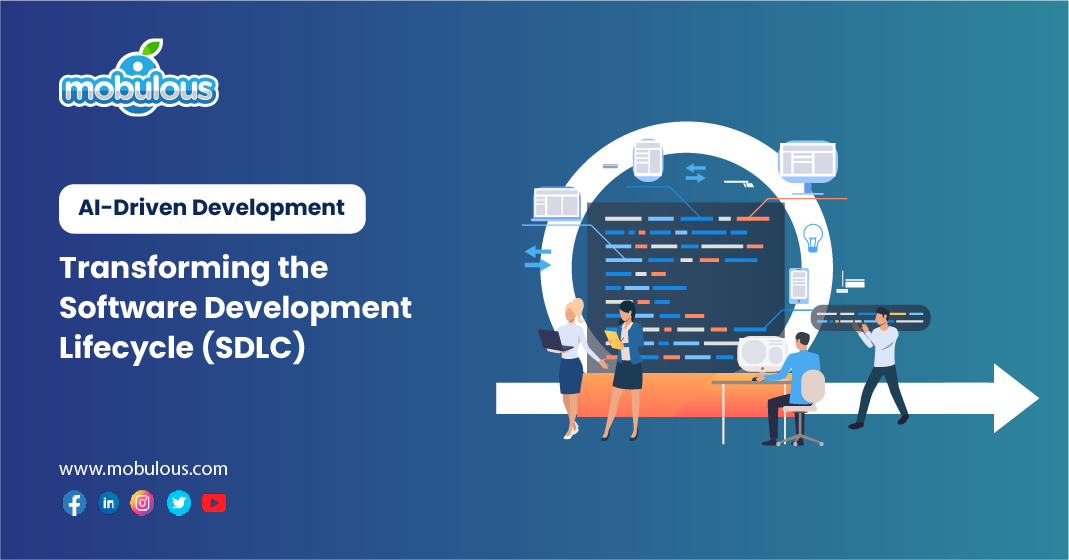
Where AI features sit inside cloud-hosted SaaS products rather than as standalone demos.
Continue Reading

A practical map of application software types buyers use when framing cloud and product scope.
Continue Reading
Cloud applications (also called cloud apps) are software products that run on remote cloud infrastructure and are accessed over the internet, rather than being installed and operated only on on-premises servers. Common examples include SaaS dashboards, multi-tenant platforms, API backends for mobile clients, and internal tools hosted on AWS, Azure, or Google Cloud. Users interact through a browser or app; the compute, storage, and scaling live in the cloud.
A cloud app is the same idea in shorter form: an application whose primary runtime is cloud-hosted. It may still have mobile or desktop clients, but the business logic, data, and often the admin surfaces run as cloud-based application development rather than a fixed on-site stack. The difference from a traditional installable product is elasticity — capacity and cost track usage instead of peak hardware you own year-round.
Cloud application development is the practice of designing, building, migrating, and operating software for cloud platforms — including cloud-native applications, serverless components, CI/CD automation, and cloud infrastructure technology choices. It covers application development for the cloud from first architecture through post-launch support, not just lifting an old codebase onto a virtual machine. The goal is applications on the cloud that scale on demand, stay available, and remain cost-predictable under real traffic.
How to build a cloud application usually follows six stages: assess goals and constraints, design architecture (compute, data, networking, security), build or migrate against that design, automate testing and deployment, optimize cost and performance under live usage, then operate with monitoring and support. Start by locking workload patterns (steady, spiky, event-driven) before picking services — that decision drives whether serverless, containers, or managed databases fit. Our process on this page mirrors that path so scope, risk, and platform choice are documented before heavy coding begins.
How to choose a cloud application development company: verify delivery evidence (portfolio and reviews), ask who owns architecture decisions after kickoff, confirm IP and source-code transfer terms, and check security certifications that match your risk profile. Prefer partners who can explain trade-offs across AWS, Azure, and GCP without pushing a default vendor, and who separate cloud runtime work from SaaS commercial design when those are different problems. For enterprises, also ask about named engineers, NDA before deep discovery, and engagement models that survive after go-live.
Enterprises evaluating a cloud application development company for enterprises typically need scalable cloud solutions, clear isolation and compliance paths (for example ISO/IEC 27001:2022-aligned delivery), multi-system integration experience, and support models that outlast the first release. Ask for workload-to-architecture reasoning, not a logo wall of cloud brands, and confirm how migrations minimize downtime. Mobulous engages fixed-price, dedicated-team, or staff-augmentation models so procurement can match how the organization actually wants to build.
Cloud-native means an application is designed specifically to run in the cloud, typically using containers, microservices, and managed cloud services, rather than being a traditional application later moved onto cloud servers. Cloud native apps and cloud-native applications are generally easier to scale, deploy, and recover from failure because their architecture assumes distributed, elastic infrastructure from the start rather than fixed hardware.
The right cloud platform depends on your existing tools, team expertise, compliance requirements, and specific services you need, such as AI tooling, data warehousing, or regional data residency. There's no universal best choice. We assess your requirements during the strategy stage and recommend a platform, or a multi-cloud approach, based on your actual constraints rather than a default preference.
Cloud costs are managed through right-sizing infrastructure, choosing serverless or containerized components where they reduce idle spend, and setting up monitoring that flags unusual usage early. We review cost alongside performance during the optimize stage of our process, since the cheapest architecture on paper isn't useful if it can't handle real traffic reliably.
Yes. On delivery and final payment, clients receive the source code, documentation, and intellectual property for their project, along with the credentials and repository access needed to run it independently. This is standard contract language in every engagement, not a negotiated add-on, so you are never dependent on us to operate what we built.
Cloud applications can be highly secure when built with proper access controls, encryption in transit and at rest, and regular security reviews, often more consistently than self-managed on-premises systems. Security depends on how the application and infrastructure are configured, not the cloud model itself. We build to ISO/IEC 27001:2022-aligned practices and to regulatory frameworks like HIPAA or GDPR where applicable.
Yes. Migration starts with an assessment of your current architecture, data, and dependencies to identify what can move directly, what needs refactoring, and what risks exist during the transition. We plan migrations to minimize downtime and disruption to existing users, and validate the migrated application against real usage before considering the migration complete.
Timelines vary widely based on scope, integrations, compliance requirements, and whether the project is a new build or a migration, typically ranging from around 1 month for a narrow MVP to 12 months or more for complex, multi-system enterprise platforms. We provide a realistic timeline after the assessment and strategy stage, once scope is actually understood.
Buyers comparing cloud application development companies look for evidence, process, and post-launch accountability — not a “best of” label. Mobulous brings over a decade of software delivery experience, ISO/IEC 27001:2022, ISO 9001:2015, and CMMI Level 3 certified processes, and a track record of 700+ delivered apps for 500+ clients across 30+ countries. Engagements include direct access to the engineers on your project and flexible models (fixed-price, dedicated team, or staff augmentation) so the working relationship fits how you actually want to build.
Whether you need cloud-based app development, a migration plan, or architecture that survives real traffic, Mobulous can own cloud computing app development from assessment through operate-and-support. Free discovery calls. Mutual NDA before deep detail. Offices in Noida, Newark, Delaware, and Calgary, Alberta.