Burger King Nigeria
Client: Burger King. Food delivery ecosystem for Nigeria: customer ordering, customisation, live tracking, plus rider workflows. Shipped as native mobile clients with a web companion.
Kotlin
+ Swift mobile
Native mobile app development costs more and takes longer than a shared codebase. That is the honest starting point. As a native mobile app development company, Mobulous builds separate Swift and Kotlin apps when performance floors, hardware APIs, deep offline behaviour, or platform design language make a single stack the weaker bet.
Score your product against the five criteria below. If most land in the "yes" column, separate Swift and Kotlin builds usually repay the extra calendar and budget. If most land in "no," start with hybrid app development or the stack decision on our cross-platform page. Native is a cost decision first. The checklist makes that decision readable before anyone opens a repository.
Users will notice frame drops, thermal load, or latency on mid-range devices. Games, live video, heavy animation, and sustained sensors sit here. Catalogue and booking apps usually do not.
Core value depends on Bluetooth, NFC, HealthKit/Google Fit, background location, widgets, CarPlay/Android Auto, camera pipelines, or AR. Bridge layers become a permanent tax.
The product must work for long stretches without network, with conflict-safe local storage and background sync that matches how each OS schedules work.
The brand promise includes feeling unmistakably iOS on iPhone and Material on Android, not a lowest-common-denominator UI shipped to both stores.
You can fund and staff (or retain) Swift and Kotlin ownership for years: two release trains, two store review paths, shared product intent. Without that, native becomes an abandoned half-build.
Still unsure whether a single codebase can carry the product at all? That is the hybrid app development question. Already sure you want shared code and need Flutter vs React Native? That is cross-platform.
Use this path after you have glanced at the scorecard. It keeps native from becoming the default answer for every brief.
Catalogue, booking, content, and most commerce products rarely need two native repositories on day one.
See hybrid app development →Without sustained owners for both repositories, one store will lag. Sequence a single platform or use a shared stack instead.
Revisit hybrid app development →Plan two repositories, shared APIs, and coordinated store releases. Continue with the services and process on this page.
See native services →These products are examples of mobile app development company native apps: platform-native mobile clients where the recorded stack lists Swift and/or Kotlin. Fitscope is included as a dual-store fitness product from prior Mobulous delivery. Web companions may use React or Node. Native still costs more than a shared codebase for the same feature list. The reason to pay is specific: device APIs, performance floors, and store experiences that fight a bridge layer.
Client: Burger King. Food delivery ecosystem for Nigeria: customer ordering, customisation, live tracking, plus rider workflows. Shipped as native mobile clients with a web companion.
Client: Fitscope LLC. Paid HIIT coaching product: trainer-led classes, guided programmes, and offline class access, built for home gym equipment and handed to the client US team after launch.
Client: Easy Health Solutions. Healthcare access across India: appointments, records, home healthcare, hospital management. Native mobile clients with a web layer.
Client: Syrotech. Support platform for OLT/ONT devices: registration, troubleshooting, and technical assistance for network hardware users.
Client: Homies4U. Student accommodation across India: verified hostel and PG listings, landlord portal, booking flows on native apps plus web.
Client: Taxeasy Solutions Pvt Ltd. Android billing and filings app: digital invoices, multi-business records, estimations, quotations, and stock-aware documents. Delivered as a private native Android build (not a public store listing).
End-to-end native app development services for products that need separate iOS and Android codebases: platform-native design, Swift and Kotlin engineering, dual-store QA, and long-running maintenance. Mobile app development companies building native apps pay more than a single shared stack because you maintain two repositories and two release trains. We also tell you when that spend is overkill and when hybrid app development is the clearer fit.
Walk the scorecard above against your features, budget, and team. You leave with a written call: native both stores, sequence one platform first, or switch to hybrid app development.
Native iOS app development in Swift (and Objective-C where legacy code demands it) for iPhone and iPad. Human Interface Guidelines, App Store submission, and Apple API surfaces your product actually needs. Details on our iOS app development page.
Native Android app development in Kotlin (and Java for inherited modules) across the device spectrum. As a native Android app development company we handle Material Design, Play Console release, and OS APIs without a bridge. Details on our Android app development page.
Two design systems when the brand needs them: iOS patterns on Apple devices, Material on Android. Shared product intent; platform-correct interaction models.
Real-device and farm testing for each OS. Regression covers store-specific behaviour, permissions, background work, and the hardware features your scorecard flagged.
OS upgrades, store policy changes, and feature work on parallel trains. Native does not end at launch; it needs owners for both repositories.
Architecture, integrations, and compliance for a native mobile app development company building scalable applications that will live on both stores for years. Shared backends where it helps; native UI where it matters.
Two codebases mean two build pipelines, two QA surfaces, and usually more calendar. If your features sit in the middle of the scorecard, we point you to hybrid app development instead of selling Swift and Kotlin by default. Paying for native without a filled scorecard is how teams burn budget on the wrong architecture.
No bridge for HealthKit, background sensors, widgets, or payment edge cases. When those APIs are the product, native removes a layer of failure modes that shared stacks keep rediscovering in production.
Navigation, gestures, and system chrome match what users already know on each device. That is a product choice when brand equity depends on feeling native, not a fashion preference for designers.
Swift and Kotlin teams under one delivery process so product intent stays aligned even when repositories diverge. Mobile app development services for native programmes include both platforms under one lead. See iOS app development and Android app development for platform depth. Dual native without a shared product lead is how you ship two apps that look related and behave differently.
ISO 9001:2015, ISO/IEC 27001:2022, and CMMI Level 3. Process is audited practice across dual-store releases, not a slide-deck claim for sales calls.
Dual-store native delivery is slower than a shared stack for the same feature list. The process below is built to keep product intent aligned while Swift and Kotlin repositories diverge where the OS requires it.
Scorecard review, feature map, and team capacity check. Written recommendation before either repository is opened: both stores now, one platform first, or a shared codebase instead.
iOS and Android prototypes in parallel. Shared flows where the product is identical; divergent navigation, gestures, and system chrome where each OS expects its own patterns.
Two-week cycles with runnable builds on both platforms. Shared API contracts and release milestones; native UI and device modules owned per stack so neither store becomes a thin port of the other.
Device matrix testing for each OS. Permissions, background work, offline paths, and store-specific edge cases covered before submission so review surprises stay rare.
Metadata, review handling, and staged rollout on both stores. Post-launch OS-update support runs on two maintenance tracks with a single product owner so features do not drift apart.
These are the native mobile app development technologies behind dual-store delivery. Shared backends stay shared. The UI and device layers stay platform-native when the scorecard says they must. Each native mobile app developer owns the platform stack they ship.
Choosing between native and a shared codebase? Read Native vs Cross-Platform Apps in 2026. For platform-specific delivery paths, see iOS app development and Android app development.
Native App Development Insights

Performance, cost, and reach compared so you can see when separate Swift and Kotlin builds still earn the spend.
Continue Reading

How to evaluate native partners on portfolio, stack depth, process, and post-launch ownership before you shortlist.
Continue Reading
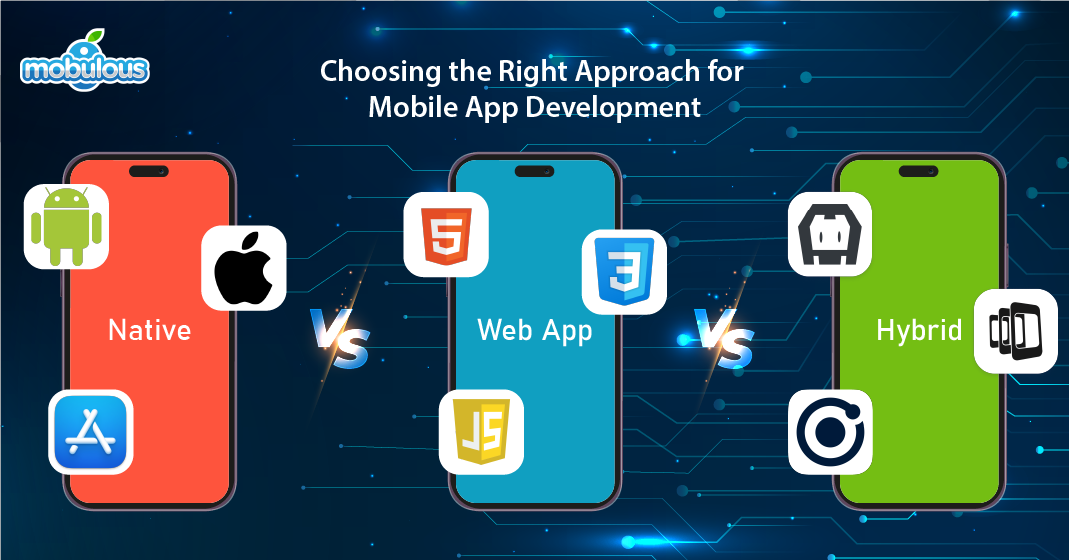
Where platform-native apps differ from hybrid and web so you can decide when two codebases are justified.
Continue Reading
"They ensured that every aspect of the app as working perfectly before they delivered it to us."
Verified on Clutch →"They were always professional, quick, and well-organized."
Verified on Clutch →"They ensured every feature was meticulously fine-tuned to our satisfaction before the final delivery."
Verified on Clutch →Mobulous rates 4.7/5 on Clutch across 103 reviews. View the full Clutch profile →
Native application development means building an app in the platform's own languages and tools: Swift or Objective-C with Xcode for iOS, Kotlin or Java with the Android SDK for Android. You get direct OS APIs and platform-correct UI. The trade-off is two codebases when you need both stores, which is why this page focuses on when that cost is justified.
Native Android apps are built with Kotlin or Java against the Android SDK and Jetpack libraries. They are not React Native or Flutter shells. They can use Material Design patterns, Play Console release paths, and Android-only APIs without a bridge layer. See our Android app development page for platform depth.
Define product requirements and whether iOS ships in the same window. Design Material-correct UX, implement in Kotlin (or Java for inherited modules), integrate device APIs, run device-matrix QA, then release through Play Console. If both stores are required and the scorecard is full, plan a paired Swift track as well. A Native Fit Assessment maps that path before either repository opens.
Usually yes. Two codebases mean more engineering hours, two QA surfaces, and two store release trains. The gap shrinks if you only ship one platform first. Cross-platform and hybrid share UI and business logic; native pays twice for features that look the same on both stores. Use the 90-second estimator for a ballpark, then a Native Fit Assessment for a written range tied to your backlog.
Timeline tracks feature complexity and whether both stores ship together. Dual-store native almost always takes longer than a single shared codebase for the same feature set because design, build, and QA run on two tracks. We do not publish a fixed average; the assessment ties schedule to your backlog and to whether you can sequence one store ahead of the other.
You need Swift ownership and Kotlin ownership. That can be two squads or one delivery organisation with specialised engineers. Product, design intent, and API contracts should stay shared so the apps do not diverge into two products by accident. Without a single product lead, dual native becomes two side projects that share a brand name.
Higher than a shared stack. Each OS upgrade can touch both repositories. Store policy changes land twice. Feature parity requires coordinated releases. Plan for ongoing native capacity; otherwise one platform falls behind within a release cycle or two and users treat the lagging store as abandoned.
When your scorecard is mostly empty: standard catalogue, booking, content, or commerce flows; no hard performance floor; no deep hardware APIs; and budget or headcount cannot carry two trains. In those cases start with hybrid app development and revisit native only if production evidence proves the shared stack is the bottleneck.
Yes. Sequence iOS or Android first when demand is platform-skewed or when budget cannot fund both trains on day one. Keep API contracts and design tokens clean so the second native app is not a rewrite of the backend. Sequencing is still native; it is just honest about capacity.
This page asks when two native codebases repay the cost. Hybrid asks whether a single codebase fits at all. Cross-platform asks which shared stack to use once that answer is yes. The three pages are a decision cluster, not three pitches for the same engagement.
Yes. Platform depth lives on our iOS app development and Android app development pages. Native programmes use both under one delivery lead so release calendars and product intent stay coordinated.
Mobulous is a mobile app development company and a native mobile app development company that helps product teams decide when separate Swift and Kotlin builds repay the extra cost. We offer professional native mobile app development services with dedicated developers when the scorecard fills and the budget can carry two codebases past launch. We have delivered 700+ apps over 12+ years, rate 4.7/5 on Clutch (103 reviews), and operate from Noida, Newark (Delaware), and Calgary (Alberta).
If a single codebase may fit, start with hybrid app development. For platform-specific depth, continue on native iOS app development or native Android app development.
Need a cost ballpark first? The 90-second estimator gives a range before the call.
Related capability: mobile app development services, including app development company, including iOS app development.