Listings come from somewhere else
Inventory arrives from portals, CRMs, agent uploads, or feeds. Keeping that pipeline current is the product. MLS, IDX, and portal APIs are market considerations when needed, not a default delivered claim.
Property platforms live or die on listing freshness and lead speed. We are a mobile app development company for property listings, virtual tours, and transaction flows where inventory sync and agent routing are first-class. Brief the data path, not only the screens.
Property platforms fail on stale inventory, photo weight, map load on mid-range phones, and enquiries that never reach the right agent. RERA in India and agent licensing elsewhere sit with the client; our job is architecture that keeps listings honest. See also mobile app development and custom app development.
Inventory arrives from portals, CRMs, agent uploads, or feeds. Keeping that pipeline current is the product. MLS, IDX, and portal APIs are market considerations when needed, not a default delivered claim.
A property that sold last week still showing as available is worse than no listing. Buyers lose trust; agents get angry leads. Detection and removal rules belong in the sync design, not in a support ticket after launch.
Listings often carry 20–40 images each. That volume drives storage, bandwidth, and first paint. Builds need compression, lazy load, and CDN strategy before the gallery UI is polished.
Map clustering degrades on mid-range Android once you pass a few thousand pins, which shapes how listings are loaded. Viewport queries and cluster tiles matter more than a full dump of markers.
Buyers filter by commute time, school catchment, and budget including fees, not only bedrooms and price. Facets that ignore real search behaviour push users back to portals.
An enquiry has to reach the right agent fast. Most platforms lose deals in assignment queues, timezone gaps, or shared inboxes. Routing rules and SLAs are product work.
Agent tooling decides listing quality. If upload, photo, status, and availability tools are clumsy, the consumer app inherits garbage inventory no matter how polished the search screen looks.
Working checklist for property platforms. Each stage is a contract decision. Skip one and buyers see sold inventory, agents fight over leads, or photos crush load time. See mobile app development and custom app development.
MLS, IDX, and major portal APIs are scoped as considerations when a market brief requires them. Map SDKs and tour or payment providers follow the same rule: market choice, not a universal delivered stack. For B2B property sites that sit beside the app, see B2B website development.
Property platforms where listing sync, search, and agent tooling stay aligned across iOS and Android, scoped to your inventory model.
Custom apps for browse, detail, enquiry, and agent desks. Features follow your inventory sources and assignment rules so sold status and lead ownership stay clear.
Consumer and agent journeys on Apple and Google stores. We design for map performance, photo-heavy galleries, and offline-friendly drafts when agents work on site.
Cross-platform paths with Flutter or React Native when one codebase fits both stores. Stack choice follows portfolio evidence, not a slogan.
Tenant and landlord tools: listing management, availability, maintenance requests, and portfolio views when the brief includes ops beyond browse-and-enquire.
Map SDKs, virtual tour providers, and payment gateways are chosen by market and product needs. Treat them as integration options in discovery, not a fixed vendor claim on every project.
CRM and property database sync is scoped when the brief has a system of record. Conflict rules, stale detection, and agent connect flows sit beside the consumer UI.
Bespoke builds: custom app development · mobile app development · B2B property sites under B2B website development.
Our reading of what is changing in property product work. Positions, not adoption statistics.
Teams that treat sync as a late feature keep shipping stale maps. Our view: origin, cadence, and stale rules belong in the first architecture pass.
Commutes, catchments, and all-in cost filters are table stakes. Our view: model questions buyers ask, then wire facets to data you can keep current.
Consumer polish cannot fix weak upload and status tools. Our view: invest in the supply side early so verified listings stay possible.
Stacks below match BNC AIR, Homies4U, and PG Dekho. Map SDKs, tours, payments, MLS, and IDX are market considerations, not a universal delivered stack.
React Native and Node.js with listing detail, status, agent connect, and CRM-backed inventory sync.
Verified hostel and PG listings with a landlord portal. React.js, Node.js, HTML5, Kotlin, and Swift.
Rental and PG discovery with owner listing tools. React.js, HTML, Node.js, and MongoDB.
Map clustering degrades on mid-range Android once you pass a few thousand pins, which shapes how listings are loaded. Photo pipelines for 20–40 images per listing need the same early attention as the search UI.
Three property projects from our portfolio records. Descriptions stick to listing mechanics: sync, verification, and owner or agent tools. Contaminated case-study metrics are not used.
Client: BNC. Property and project listings with sector browse, listing detail, status (under construction, live, RFP), agent connect, and notifications. Case study: 31,000+ listings with CRM integration so inventory stays tied to the system of record.
Client: Homies4U. Verified hostel and PG listings with detailed profiles, search and filters, and a landlord portal so supply-side users manage inventory without a separate desk tool.
Client: PG Dekho. Rental and PG discovery with verified listings, advanced filters, direct owner contact, and owner-side listing and management so tenants and landlords share one inventory surface.
Listing data and lead routing ship with the UI. Duration depends on scope and feedback, not a fixed calendar promise.
Map listing origins, sync cadence, agent roles, search facets, and map load expectations before UI polish.
Wireframes for browse, detail, enquiry routing, and landlord or agent upload. Stale and sold states appear in the journey.
Choose stacks, canonical record ownership, conflict rules, photo pipeline, and clustering strategy for large pin sets.
Agile delivery with regular demos. Ship consumer and supply-side surfaces with sync jobs and lead assignment together.
QA for search, map performance, photo load, sold removal, and enquiry routing under realistic inventory sizes.
Store or web launch, then monitoring so feeds, alerts, and listing quality stay usable after go-live.
Since 2013 we have delivered 700+ apps for 500+ clients across 30+ countries, with 100+ experts and offices in Noida, Newark (Delaware), and Calgary (Alberta). We rate 4.7/5 on Clutch across 103 reviews. Certifications: ISO 9001:2015, ISO/IEC 27001:2022, CMMI Level 3.
Since 2013 on mobile and web, including property platforms where listing sync and agent tooling matter as much as search UI.
Origin, cadence, conflict, stale removal, and photo pipelines early so sold inventory does not stay visible after the deal closes.
Repositories, store listings, and cloud accounts sit in your name. NDA available before detailed technical discussion.
Encryption, authentication, and logging in the build. ISO/IEC 27001:2022 sits beside delivery.
Reading on real estate and PropTech
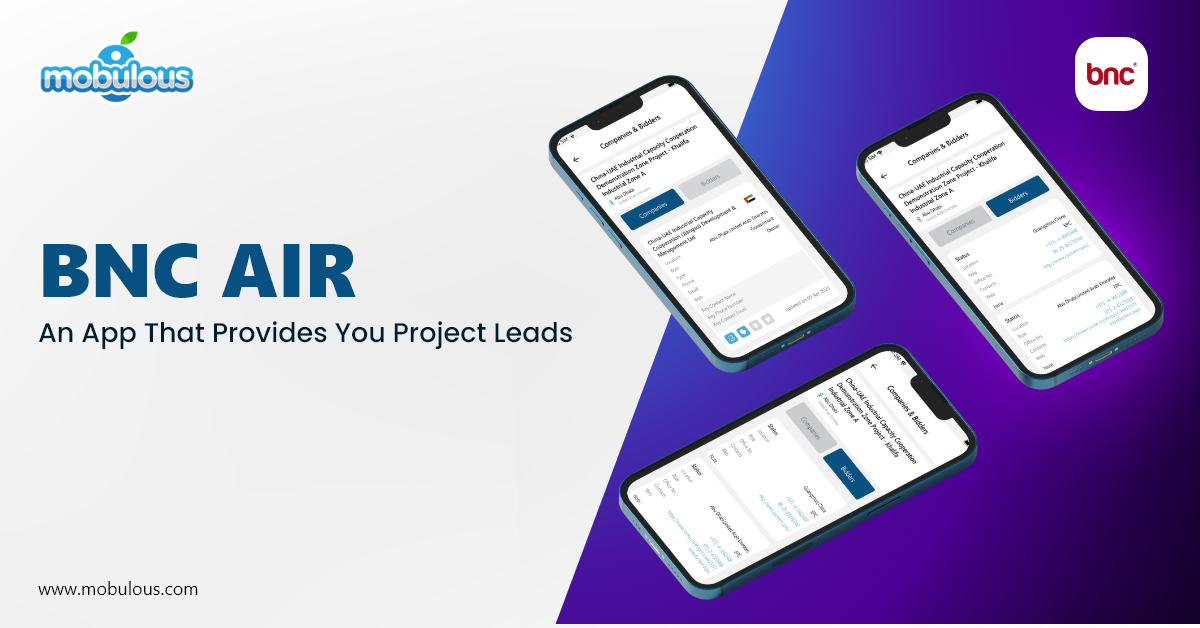
How a property and project lead app surfaces listings, search, and agent connect for subscribers.
Continue Reading

A plain-language look at PropTech and how technology changes buy, sell, and manage workflows.
Continue Reading
"They contributed ideas that made the app better and more in line with our vision."
Verified on Clutch →"They ensured every feature was meticulously fine-tuned to our satisfaction before the final delivery."
Verified on Clutch →"They were always professional, quick, and well-organized."
Verified on Clutch →Mobulous rates 4.7/5 on Clutch across 103 reviews. View the full Clutch profile →
Real estate applications are platforms that enable real estate agents and brokers to advertise properties for sale or rent, and for prospective buyers and tenants in order to find them effectively. They usually include tools that help users filter searches by location, property type, price, and amenities.
Real estate software development services foster the development of software products, advanced systems, and PropTech tools that simplify, enrich, and propel growth.
In order to create a real estate mobile app professionally like the best real estate app development company, you need to follow the below steps carefully:
Artificial Intelligence or AI harnesses advanced algorithms and machine learning models in order to examine comprehensive datasets that encircle property details, customer preferences, market dynamics, and other crucial details and factors.
Look for software that keeps listings accurate, routes enquiries to the right agent quickly, and fits how your team already works. Off-the-shelf tools are enough when your inventory, roles, and lead rules are standard. Custom development becomes the better path when you need unique listing sources, sync rules, filters, or agent workflows that packaged products cannot carry without workarounds.
A real estate chatbot is an AI-powered tool that assists users with inquiries, property searches, and bookings. It operates 24/7, providing instant responses, and personalized recommendations, and enhancing customer experience while reducing the workload for agents and businesses.
Mobulous builds real estate apps where listing freshness and lead speed shape the product. 700+ apps since 2013 from Noida (Newark, Delaware · Calgary, Alberta). 4.7/5 on Clutch (103 reviews). NDA available before detailed discussion.
Custom app development · mobile app development · B2B website development.
Related capability: web application development services, including app development company, including mobile app development services.