Challenges Faced
The store relied on phone orders and manual bookkeeping. Stock updates were slow, deliveries were unplanned, and customers often waited without knowing their order status.

Madanlal Pansari ran a neighborhood grocery store for decades, the kind where the owner knew your family's monthly order by heart. This Grocery App Development Case Study is about turning that trust into a digital grocery brand, one order at a time.
View ResultsMadanlal Pansari is a trusted grocery and provisions store, serving families across generations with quality and reliability.
The store relied on phone orders and manual bookkeeping. Stock updates were slow, deliveries were unplanned, and customers often waited without knowing their order status.
Mobulous aimed to digitize ordering, automate inventory, and give customers real-time visibility into their deliveries, all while keeping the experience simple for every age group.
Primary: Busy urban households that want groceries delivered quickly without stepping into a crowded store.
Secondary: Elderly customers and working professionals who prefer scheduled deliveries and simple, guided ordering.
Before writing a single line of code, our team spent weeks understanding how real customers shop for groceries.
Occupation : Marketing Manager at a mid-size corporate firm
Pain Points : Priya has little time to visit stores and often forgets items when she's rushing between meetings.
Goals : She wants a fast, reliable app that remembers her usual list and delivers within hours.
Occupation : Retired schoolteacher living with his wife in a quiet residential neighborhood
Pain Points : Ramesh finds small app text confusing and worries about entering payment details online safely.
Goals : He wants a simple interface, clear pricing, and the option to pay cash on delivery.
Our research showed that trust matters more than flashy design. Customers wanted clear pricing, dependable delivery windows, and an app that felt as familiar as their neighborhood store.
Completed and handed over
Project delivered and handed over to client
4 onsite resources
Dedicated onsite team for the project
8 months with the client product team
Collaborative engagement with client product team
Monthly offshore billing
Billing aligned to monthly offshore delivery
Building this grocery app took a structured, six-phase journey from research to a fully functioning grocery marketplace.
We began by interviewing the Madanlal Pansari team and mapping their existing order process. This helped us identify gaps in inventory tracking and delivery coordination early on.
CompletedOur designers sketched wireframes focused on minimal taps and large, readable text. We tested prototypes with actual customers, refining the flow until ordering felt almost effortless.
CompletedThe backend team designed a microservices architecture that could handle order spikes, real-time inventory updates, and multiple platforms without slowing down.
CompletedDevelopers built the customer, driver, and admin apps in parallel, using shared APIs so every update on one side reflected instantly on the others.
CompletedOur QA engineers ran extensive tests across devices and network conditions, catching edge cases in payments, order syncing, and delivery tracking before launch.
CompletedWe rolled out a pilot in one neighborhood first, gathered real feedback, fixed friction points, and then scaled the app to the full customer base.
CompletedA dedicated cross-functional team worked together to bring this grocery platform to life within the planned timeline.
Mobulous focused on three pillars: understanding the business deeply, designing for real users, and building for scale.
We spent time in-store observing how customers actually shopped, which items sold fastest, and where confusion typically happened during checkout or delivery.
The app needed to work well across Android, iOS, and web, so we built a consistent design language that felt familiar no matter which device customers used.
Behind the scenes, we built systems that could handle growing order volumes, assign drivers efficiently, and keep inventory accurate across every store location.
We chose a clean, highly legible sans-serif font family for the app. It reads clearly on small screens and works well for older users who need larger, simpler text.
Headings & Titles
48px - 32px
Subheadings
28px - 24px
Body Text
18px - 16px
Captions & Labels
14px - 12px
The palette leans on warm greens and earthy oranges, colors that echo freshness and grocery shopping, paired with neutral backgrounds so product photos stay the visual focus.
#F89C1D
Main brand color, CTAs, active states
#252330
Hover states, emphasis elements
#81919E
Eco-friendly indicators, confirmations
The platform runs on three connected modules, each built for a different kind of user and task.
Android iOS Website
Customers can browse products, track orders, and reorder favorites in seconds. The app works across Android, iOS, and the web with the same smooth experience everywhere.
Android iOS
Drivers get optimized delivery routes, order details, and real-time navigation. They can update delivery status instantly, keeping customers and the admin team informed throughout.
Admin Panel
Store managers monitor inventory, orders, and driver activity from one dashboard. They can adjust pricing, track sales trends, and manage refunds without touching the codebase.
We chose a modern, proven stack that balances speed, scalability, and maintainability, giving Madanlal Pansari a platform that can grow without needing a rebuild later.
Every grocery app build has its hurdles. Here's how we solved the toughest ones for Madanlal Pansari.
Assigning the nearest available driver while accounting for traffic and order volume was tricky. Manual assignment led to delays and unhappy customers during peak hours.
We built a route optimization system that factors in traffic, distance, and driver load, automatically assigning the most efficient delivery path in real time.
With multiple platforms accessing the same stock, overselling was a real risk. A customer could order an item that was already out of stock elsewhere.
We implemented a centralized inventory system that updates instantly across the app, web, and admin panel, so stock levels stay accurate at every touchpoint.
Handling partial refunds, failed transactions, and cash-on-delivery reconciliation manually was slow and prone to errors, especially as order volume grew each month.
We built an automated reconciliation engine that tracks every transaction, flags mismatches, and processes refunds within hours instead of days.
The system was designed from day one to handle growth without breaking a sweat.
Android | iOS
Web Panel
A shared API layer connects the customer, driver, and admin apps, ensuring consistent data across every platform while keeping each app lightweight and fast.
Cloud-based infrastructure automatically scales during high-demand periods like festivals and sales, so the app stays fast even when thousands of customers order at once.
Live dashboards give the admin team a real-time view of orders, deliveries, and stock levels, helping them make quick decisions during busy periods.
Here are the features that make ordering groceries through Madanlal Pansari fast and reliable.
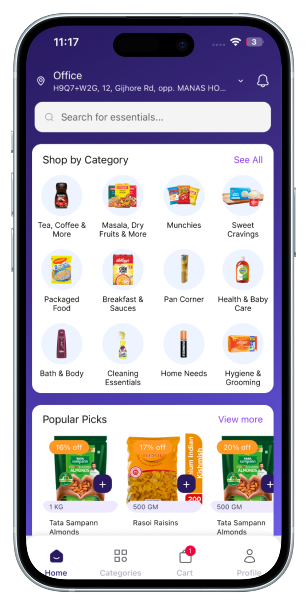
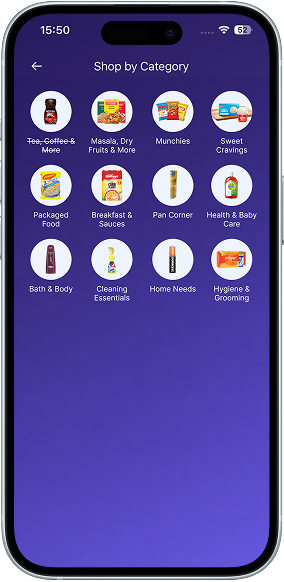
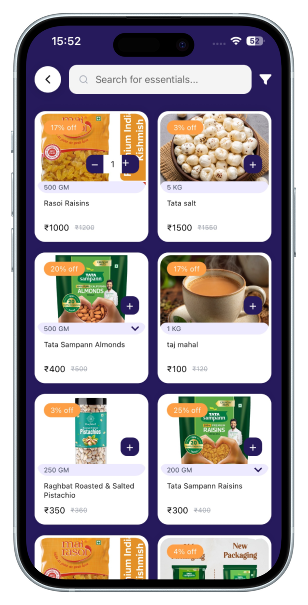
Customers can search by category, brand, or even specific dietary needs. Smart filters and suggestions help them find what they want without endless scrolling.
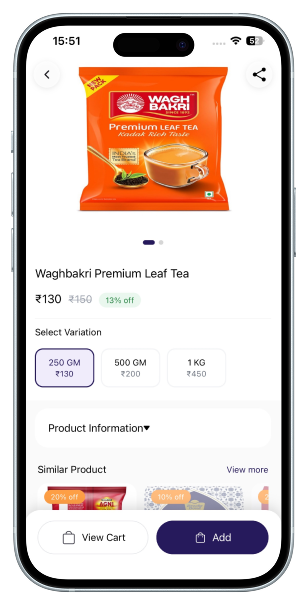
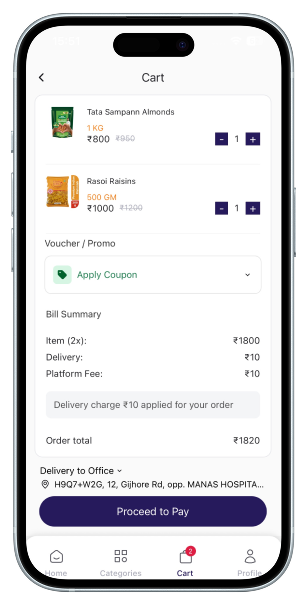
The cart automatically applies eligible coupons and highlights free offers, so customers always know they're getting the best deal without hunting for promo codes.
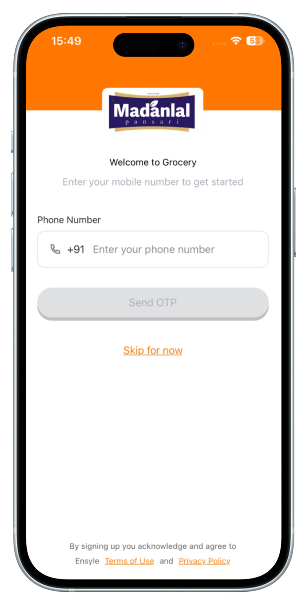
Logging in takes seconds with OTP-based authentication. There are no passwords to remember, and every session stays protected with secure verification.
Customers can pay through UPI, cards, wallets, or cash on delivery. Every transaction is encrypted, giving customers confidence every time they check out.
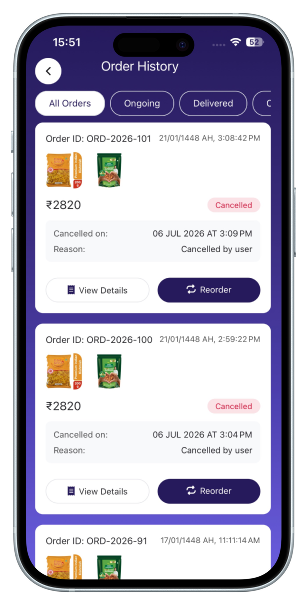
From order confirmation to doorstep delivery, customers see live updates at every stage. No more wondering when the groceries will actually arrive.
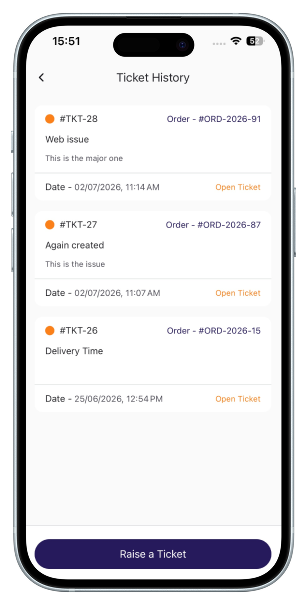
If something's wrong with an order, customers can request a return in a few taps. Refunds land directly in their app wallet for faster reuse.
Drivers get turn-by-turn navigation built right into their app, reducing wrong turns and delivery delays, especially in dense residential areas.
The admin panel shows live sales data, order status, and driver locations on one screen, giving the business owner full visibility without extra tools.
Brief : Since launch, Madanlal Pansari has seen faster order processing, fewer stock errors, and a noticeable jump in repeat customers who now shop weekly instead of occasionally.
Our relationship with Madanlal Pansari didn't end at launch. We continue supporting and improving the app.
We track app performance around the clock, catching bugs and slowdowns before customers notice them, and resolving issues quickly to keep operations smooth.
Based on customer feedback and sales data, we regularly roll out new features and tweak existing ones to keep the app aligned with business goals.
We keep the app updated with the latest security patches and OS compatibility fixes, protecting customer data and ensuring smooth performance on every device.
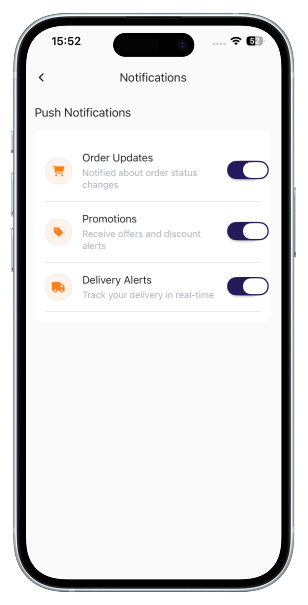
A glimpse into the Madanlal Pansari app across screens, from product browsing to delivery tracking.

Digital healthcare consultation platform connecting patients with specialists through secure video consultations and appointment management.
View Case Study
Automated recruitment and workforce management system with AI-powered candidate matching and streamlined hiring workflows.
View Case Study
Modern fashion retail e-commerce solution with personalized recommendations, virtual try-on, and seamless checkout experience.
View Case StudyFAQs - Grocery App Development Case Study
Grocery app development is the process of building a mobile or web application that lets businesses sell products online. It involves designing the user interface, building backend systems for inventory and payments, and integrating features like search, checkout, and order tracking into one smooth experience.
Essential features include product search and filters, a shopping cart, secure checkout with multiple payment options, order tracking, push notifications, and a simple returns process. Together, these features build trust and keep customers coming back to shop again.
Mobulous started with deep research into how customers shopped for groceries, then designed and built customer, driver, and admin apps in parallel. We used React Native and React.js for the front end and Node.js for a scalable backend.
Most grocery apps use React Native or Flutter for mobile, React.js or Vue.js for web, and Node.js, Django, or Laravel for backend logic. Databases like MongoDB or PostgreSQL handle data, while cloud platforms like AWS manage hosting and scalability.
A grocery app helps a traditional store reach more customers, reduce manual errors, and offer convenient ordering around the clock. For Madanlal Pansari, it meant faster order processing, better inventory control, and stronger customer loyalty over time.
Common challenges include keeping inventory accurate across platforms, optimizing delivery logistics, handling payment edge cases, and building an interface simple enough for every kind of user. Scalability and security also need careful planning from the start, especially as order volumes grow.
Grocery app development costs typically range from $15,000 to $300,000+, depending on features, platforms, and complexity. A simple app with basic features costs less, while a multi-platform solution with real-time tracking, AI-based logistics, and custom integrations sits at the higher end.
Let's transform your vision into a powerful digital solution that drives real results
Start Your Project TodayThis case study connects to our eCommerce app development, our mobile app development services, and case studies.